



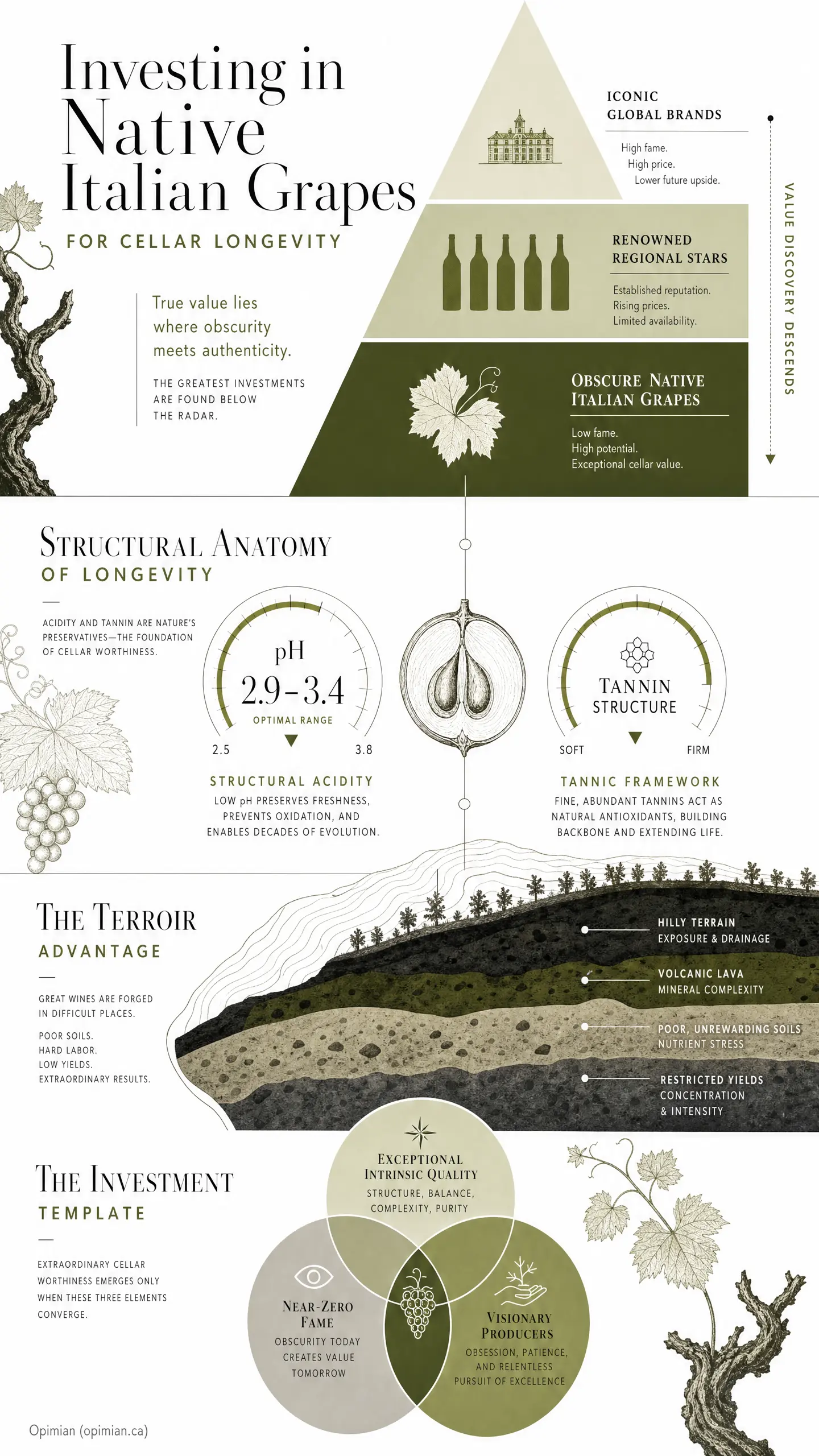
A vine given everything it wants produces wine that dies young. The bottles that keep gaining stature come from roots clawing through lava and hillsides where the topsoil washed away centuries ago, ground so poor that nothing else dares to grow.
Collectors read this exactly backwards, paying steep premiums for lushness, new oak and a famous name - the very things that make a wine dazzle at two years old and collapse by 12.
The peer-reviewed Tuscan cost study puts Brunello's full production cost at €9.49 a bottle. Even if this study fails to fully examine variations in the cost of labels, corks, capsules and cartons (which can easily add another 5 euros), the truth is that everything above the cost of raw materials buys the label and provides a return for the owner. A label has never aged a single wine.
Key Takeaways
- Although Italy officially registers nearly 600 wine-grape varieties, 59.1% of classified cellar stocks belong to just 20 appellations, leaving tremendous investment value in native DOCs farming fewer than 100 hectares.
- A wine's long-term aging potential relies on a core preservative matrix requiring a pH between 3.0 and 4.0, and at least 6 grams per liter of acidity.
- Strict yield caps directly correlate with greater fruit concentration, as demonstrated by Italy's Colline Teramane DOCG restricting growers to 95 quintals per hectare compared to the broader Montepulciano d'Abruzzo DOC limit of 140.
- Taurasi wines made from the Aglianico grape represent a great example of a little-known Italian DOCG with enormous potential. Italian regulations mandate three years of aging and production is limited to just 386 hectares across 160 declared producers.
- Applying too much new French oak to native Italian grapes like Nebbiolo, Sangiovese, and Nerello Mascalese risks destroying their delicate aromatics and may significantly shorten their intended 20-year aging curve.
- The native Italian white grape Timorasso demonstrates the investment value of rescuing obscure varieties, growing from barely 3 hectares of local plantings in the year 2000 to over 150 hectares today.
Why Do Mid-Tier Native Italian Grapes Offer the Best Investment Value?
Italy has been tarred with two brushes. At the bottom sit oceans of high-yield Chianti, Soave and Valpolicella that taste, frankly, disappointing at $10 and send people scurrying back to their Argentinian Malbec. At the top sit high-scoring wines made from international grapes in a Bordeaux idiom. Collectors pile into both ends and skip the middle, and the middle is precisely where the value lives.
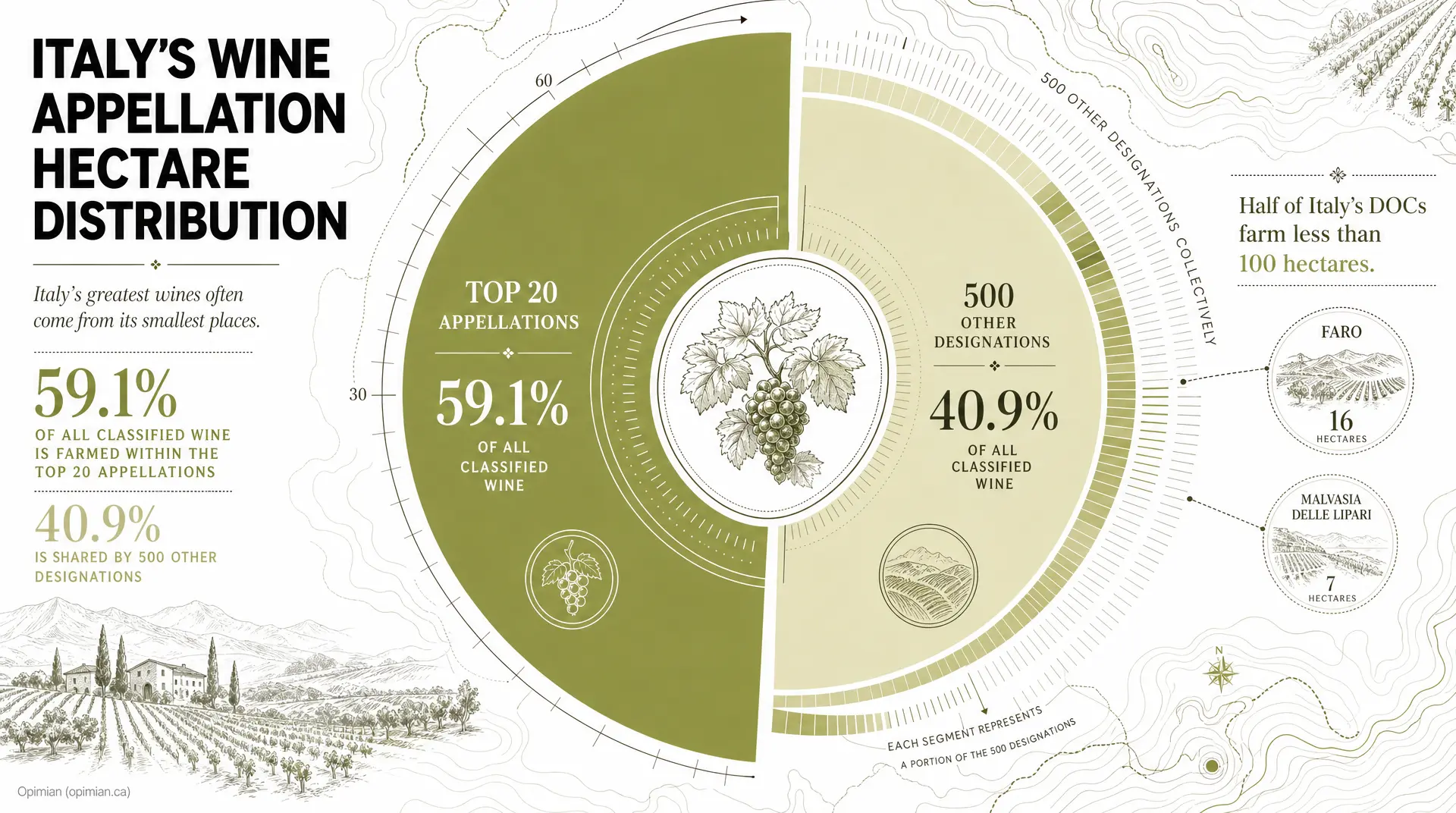
The scale of what gets skipped is hard to overstate. Italy's national register lists nearly 600 wine-grape varieties. By my reckoning, half of Italy's DOCs farm less than 100 hectares, and Federdoc's 2023 registers back up the picture: Malvasia delle Lipari at 7 hectares, Faro at 16, Villamagna under 20. Commercially irrelevant, all of them, yet many trace their histories to the Romans. I've spent 30 years driving into these backwaters and asking the same question: what are you doing up here? The answers are frequently amazing.
Why Does the Structure of Nebbiolo Determine Its Wine Cellar Longevity?
When collectors ask which native grape will outlive a modern Super Tuscan across 20 years, the obvious answer is Nebbiolo. It comes with a caveat, though. Not all Super Tuscans will last 20 years, and not all Nebbiolos will either.
What convinced me was never theory. It was sitting in Piemonte cellars while producers reached for old bottles, wines that were never famous and never from a prestigious vineyard, and tasting things that had survived extremely well. No fanfare, no scores. Just quiet performance across decades. Structure decides longevity. Labels don't. So let's talk about structure.
How Does Acidity Act as a Preservative in the Long-Term Ageing of Wine?
Mother Nature doesn't make wine. Mother Nature makes vinegar, and if we want wine we have to stop the process at the wine phase. Acidity is the brake pedal on that development, no different from squeezing lemon juice on a slice of apple to stop it going brown. Wine is the lowest-pH drink you'll ever knowingly ingest - normally 2.9 to 3.4 in my tasting room - and one food-science study pins the full preservative matrix at pH 3.0–4.0, at least 6 grams per litre of acidity, 10-15% alcohol and a measured dose of sulfur dioxide.
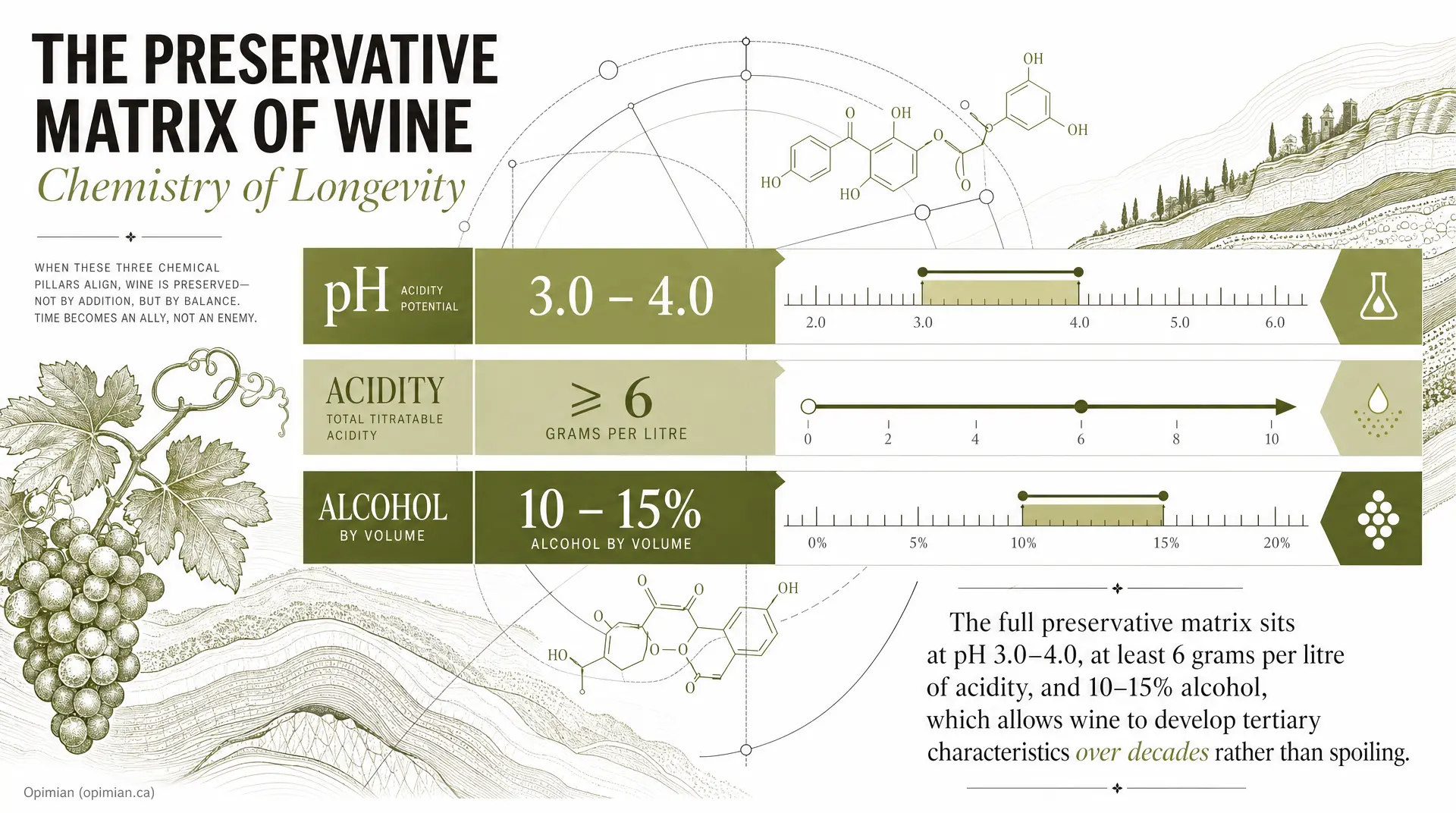
Because the pH sits that low, a well-made wine will almost never spoil in your cellar. Most collectors misread what that means. The question that matters is development. Does the wine build tertiary character, or does it just hang on, huge and monolithic, for 15 years? That's the crux of the matter, and it's why you have to peer into a wine's soul to see whether it's got the stuffing for further complexity.
The lab helps, up to a point. You can measure acidity by pH or grams per litre, and there's also dry extract, which is what would remain if you boiled off all the water and alcohol. I treat that number with caution, because a large share of it is colouring compounds, and grape varieties don't carry those in equal measure. Nerello Mascalese will never post Cabernet's extract figures. It doesn't need to.
Get the structure right and chemistry does beautiful things very slowly. Esterification knits acids and alcohols into intensely aromatic esters, and a recent review of bottle ageing adds hydrolysis, oxidation and polymerisation to the mechanisms reshaping aroma and texture under cork. Polymerisation is why tannin matters so much to a collector. Those protein-hungry phenols bind together over the years, drop out as sediment, and leave fewer attachment points on your palate, so the wine tastes smoother. And complexity, remember, is a count of how many different things there are, never a measure of sheer size. Think of Beethoven's Ninth: instruments entering one by one, quiet passages, then the build to that choral finish everybody knows.
Why Does Excessive New Oak Destroy the Ageing Potential of Native Italian Wines?
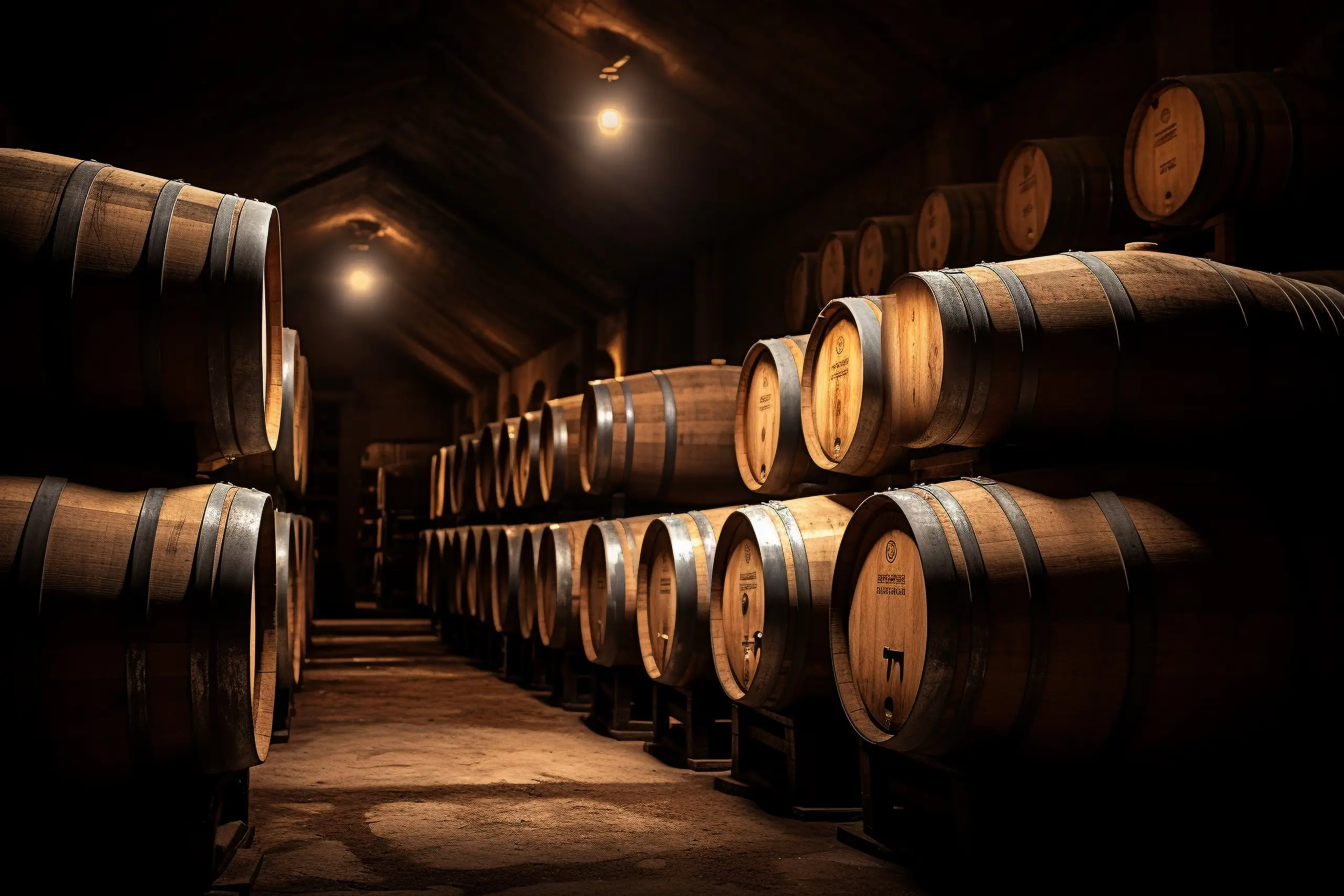
Oak is the most common way collectors get burned on "investment-grade" Italian wine, so let me tell you about the mistake I nearly made.
In the early 1990s there was a Piemonte producer I much admired and visited many times. It was a thrilling era. New producers were experimenting with new French oak, flying in the face of a hundred years of large old barrels, and I got swept up like nearly everyone did. I remember a little voice inside me going, gosh, that's a lot of oak on that. I ignored it. Ten years later I went back, tasted the same wines, and thought: my God, am I ever glad I didn't buy any.
The chemistry behind that relief is simple. Cabernet Sauvignon can soak up enormous amounts of wood. Italy's greats often can't. Nebbiolo, Sangiovese and Nerello Mascalese are wines with filigreed aromatics, and hitting them over the head with an oak stave destroys the very purity you were paying to cellar. There's a well-worn path to the barrel shop, and for these grapes it leads nowhere good.
I hold real empathy for the winemakers, mind you. You buy the land, plant the vines, wait five years for a first crop - of course you're tempted to lavish expensive wood on your creation. But the producers whose bottles belong in your cellar chase their own vision of what great wine is, and the points follow. The moment somebody starts reverse-engineering last year's 100-point recipe, the cold soak, the rotary fermenter, the 100% new French oak, the personality drains out and the ageing curve goes with it. My working rule since that Barolo lesson: the wine that impresses most at two years old on the strength of its oak is very often the one collapsing a decade later.
Why Do Poor Vineyard Soils and Low Yields Improve Italian Wine Ageing Potential?
Native grapes age well largely because they're farmed on land that punishes the vine. I've long quoted the old classification putting 85% of Italy under hills or mountains. The stricter national land-use inventory counts 41.6% hills and 35.2% mountains. Take whichever figure you like; the point remains. Most Italian vineyards sit where the rich topsoil washed away centuries ago, and Italians even have a word, medio impasto, for the classic clay-limestone mix that's ideal for viticulture precisely because it's so unrewarding.
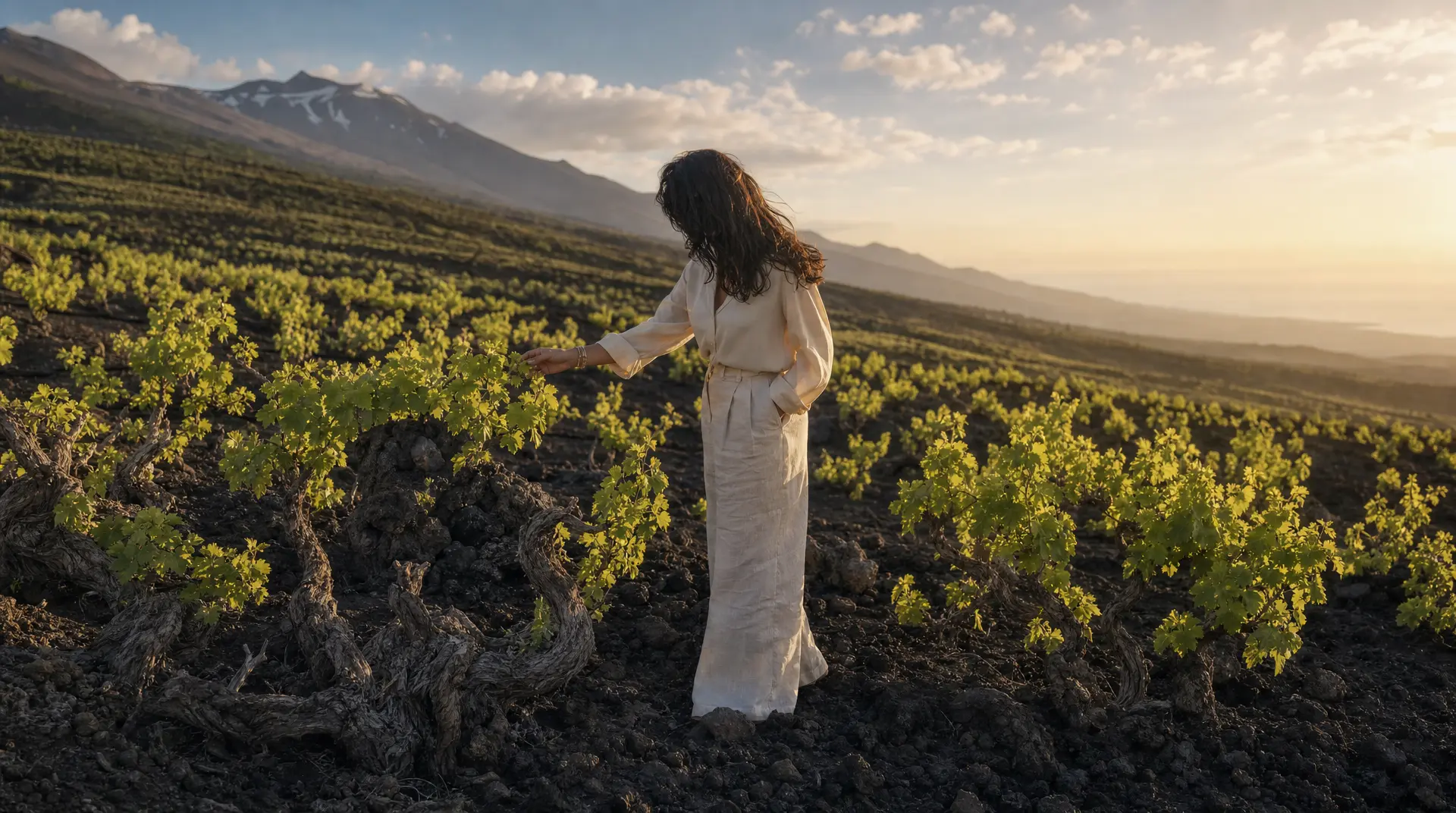
Etna is the extreme case. You drive along and there's nothing but a field of lava, soils so young they hold virtually no organic matter at all. Then, suddenly, lush green vines in the middle of it. Vines are the first thing that dares to tread in those volcanic soils, and the Nerello they yield carries a sense of place no cellar technique can fake.
The mechanism underneath all this is yield, and the easiest way to grasp it is a family. Mum or dad earns $100,000 a year and has two kids: $50,000 into each child. Same income, four kids: $25,000 each. A vine's root system is what it is. Two clusters receive everything the vine can gather. Four clusters receive half.
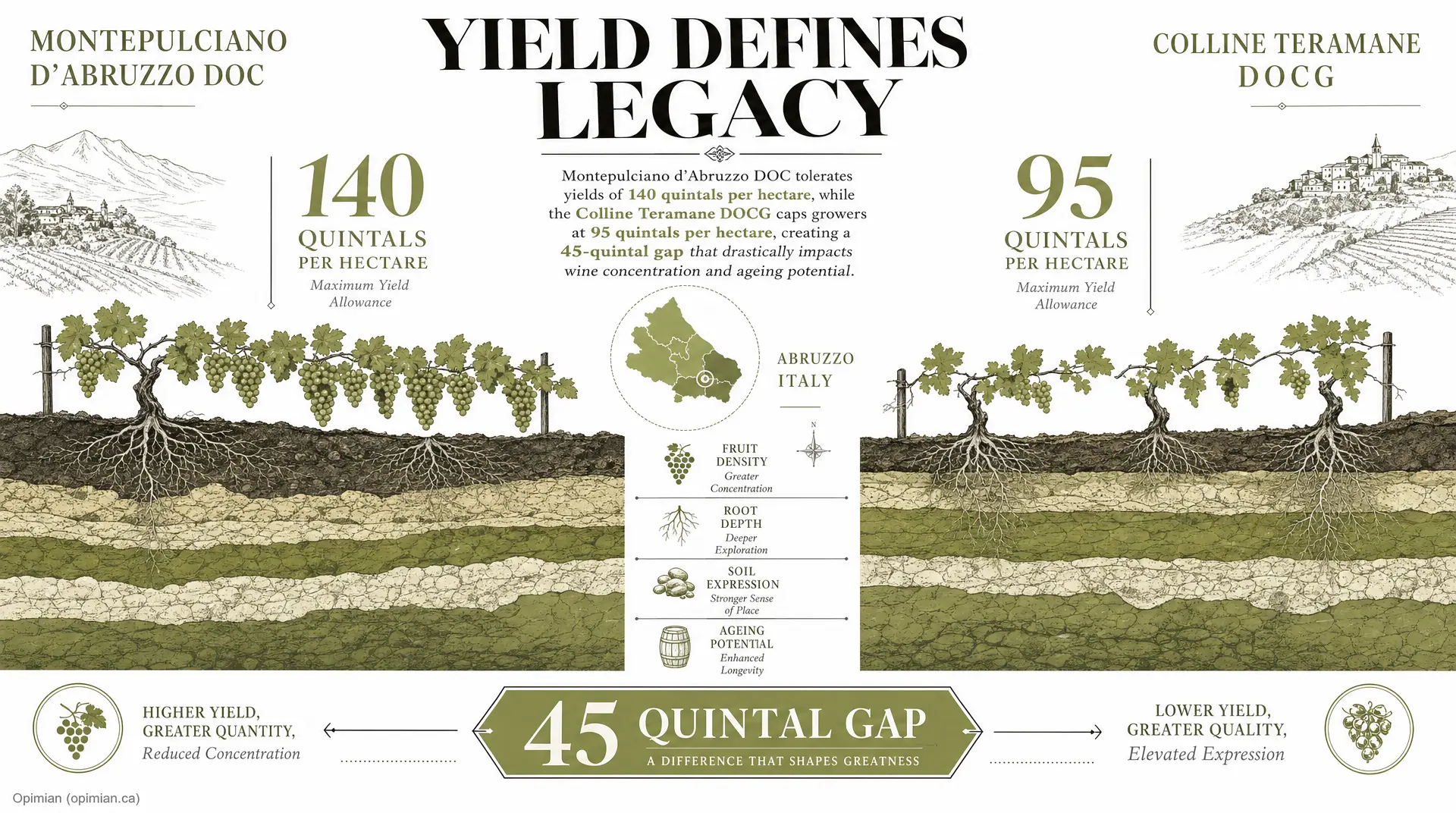
You can watch the principle written into Italian law. Federdoc's 2023 data shows the broad Montepulciano d'Abruzzo DOC tolerating yields of 140 quintals per hectare, while the Colline Teramane DOCG, all 188 hectares of it, caps growers at 95. Same grape, same region, radically different wine. When I say producer selection is everything, that 45-quintal gap is what I mean.
What Is the Timorasso Template for Identifying Undervalued Native Italian Wine Investments?
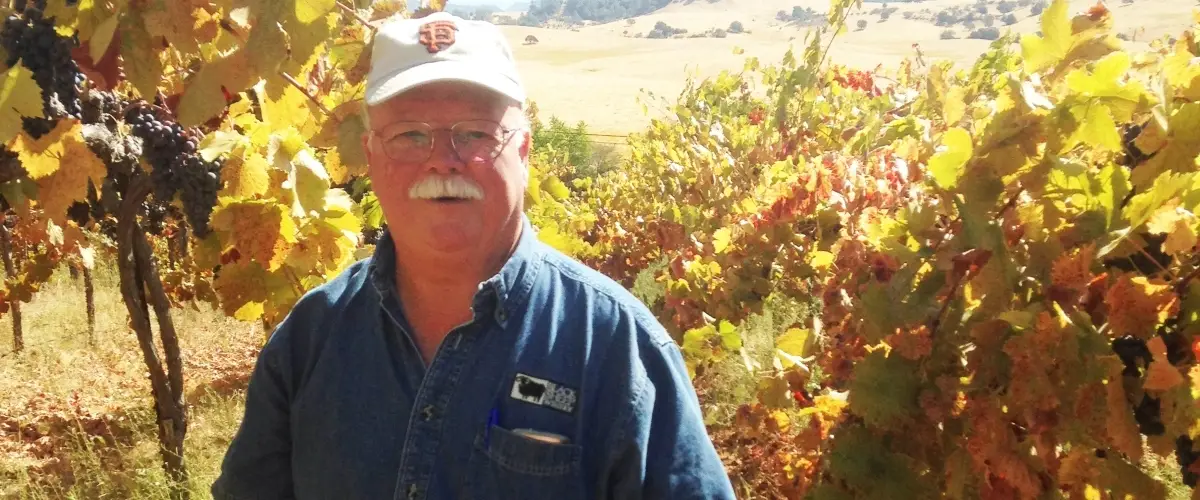
To spot a cellar opportunity before the market does, memorise a pattern I lived through personally.
Twenty-five years ago I found Walter Massa in the hills around Tortona. His family had been preserving Timorasso - the original Gavi grape, dumped after phylloxera for more productive varieties - since 1879. Tasting his wine blew my mind: a complex, structured white of extraordinary quality. He was the last producer of Timorasso on Earth, and I was his only customer. I counted six hectares left in the world. The local records put Tortona's plantings at barely 3 hectares in 2000. Either way, extinction sat one bad harvest away. Today there are more than 150 hectares and everybody wants to make it.
The template has three parts: exceptional intrinsic quality, near-zero fame, and a producer with vision but no marketing department. The window between nobody's-heard-of-it and everybody-wants-it is where a collector's money works hardest. Notice, too, that Timorasso is white, ageing on the strength of its acidity. Hold that thought.
What Are the Top Native Italian Grape Varieties for Wine Investment in 2026?
The variety I'm absolutely in love with at the moment is Montepulciano from Abruzzo. Left alone it yields far too generously. Kept in check, it gives deeply pigmented, amazingly aromatic, concentrated wines with great acidity and a genuine affinity for oak. The canvas is enormous - those same registers show just under 7,000 hectares carrying 61% of the region's appellation output - which is why the handful of growers slashing their yields are still priced as if nobody's watching. Undiscovered plus structurally serious has always equalled value, and that equation never stays quiet for long.
Taurasi, Aglianico's great expression in Campania, is practically built for your cellar by statute. The rules demand at least three years' ageing, one in wood, before release, and the whole appellation runs to 386 hectares across 160 declared producers - a rounding error beside Chianti. Firm acid, serious tannin, tiny supply. I've written on Aglianico for the World of Fine Wine, and my conviction has only deepened.
Etna stays on the list despite its fame, because it remains smaller than the noise suggests: about 1,150 hectares among 362 producers, with Etna Rosso required by law to be at least 80% Nerello Mascalese. Buy from growers who stay out of the barrel shop and let those filigree aromatics speak.
In the Veneto, Amarone remains one of the titans of Italian red wine vinification and ages beautifully, provided the acidity balances all that alcohol. And do not overlook the whites. Timorasso ages superbly. So do Verdicchio and serious Soave, and Friuli's whites can age amazingly on acidity alone. To my mind, high-acid Italian whites are the most underpriced ageing assets in the country.
One last note for the year ahead: don't reflexively avoid difficult vintages. A hard year is a storm at sea, the winemaker out thinning leaves, cutting hail-struck berries, dropping second bunches. Occasionally, as in 2014, all that remedial work meets a perfect September and delivers a tiny crop of sheer brilliance.
How Can Canadian Wine Collectors Import Small-Production Native Italian Wines Through Opimian?
I want to be careful here, because I have no patience for wine snobbery. The liquor boards do what they do really well. They bring good value to millions of people, and Opimian could never replicate that. But a family with seven hectares on a lava field cannot supply a monopoly, and half the time they can't manage the export paperwork either. Their heads are in the vineyard, not in form-filling. We once went as far as buying a producer a printer so he could get his back labels done.
That gap is where Opimian operates. We can go where the liquor boards fear to tread. Every wine is scored by our MW-led panel on balance, length, intensity and complexity, and we ignore third-party critic scores entirely, because we because we conduct that critique ourselves. Roughly 5% of what we approve earns a Coup de Coeur, and the price sits inside the test. A $300 bottle scoring 90 rarely gets one. The same score at $65 - boom, Coup de Coeur straight away.
For collectors specifically, Founders Choice lives outside the standard catalogue: six bottles of one premium wine sourced uniquely for mid-to-long-term ageing, with a personal tasting note from the winemaker. And yes, delivery runs four to eight months. Wine is an agricultural product. We're often tasting tank samples to secure an allocation, and the wine still needs ageing and bottling at the estate before it ships - after which the team behind the scenes, who never get any praise, grind it through the liquor boards on your behalf. If I've done my job on acid and concentration, time is on the wine's side.
Why Do Native Italian Grapes Better Reflect Terroir and Vintage Than International Varieties?
Think about the grape as a little video recorder, faithfully filming the season around it - when it rained, when the sun broke through, how autumn settled on one particular slope. A Super Tuscan built from international varieties records over that footage with a soundtrack you've heard a thousand times. A native grape on its home soil hands you the original reel, and nobody else owns a copy.
In 20 years, when you pull bottles for the people you love, the ones that stop conversation won't carry the biggest reputations. They'll be built on acid, born from struggle, and made by families who chased their own vision while the market looked elsewhere. That's the investment. I'll see you in the backwaters.
*Michael Palij MW is a member of Opimian's Master of Wine tasting panel and has visited Italy more than 100 times in pursuit of its native grapes.*