



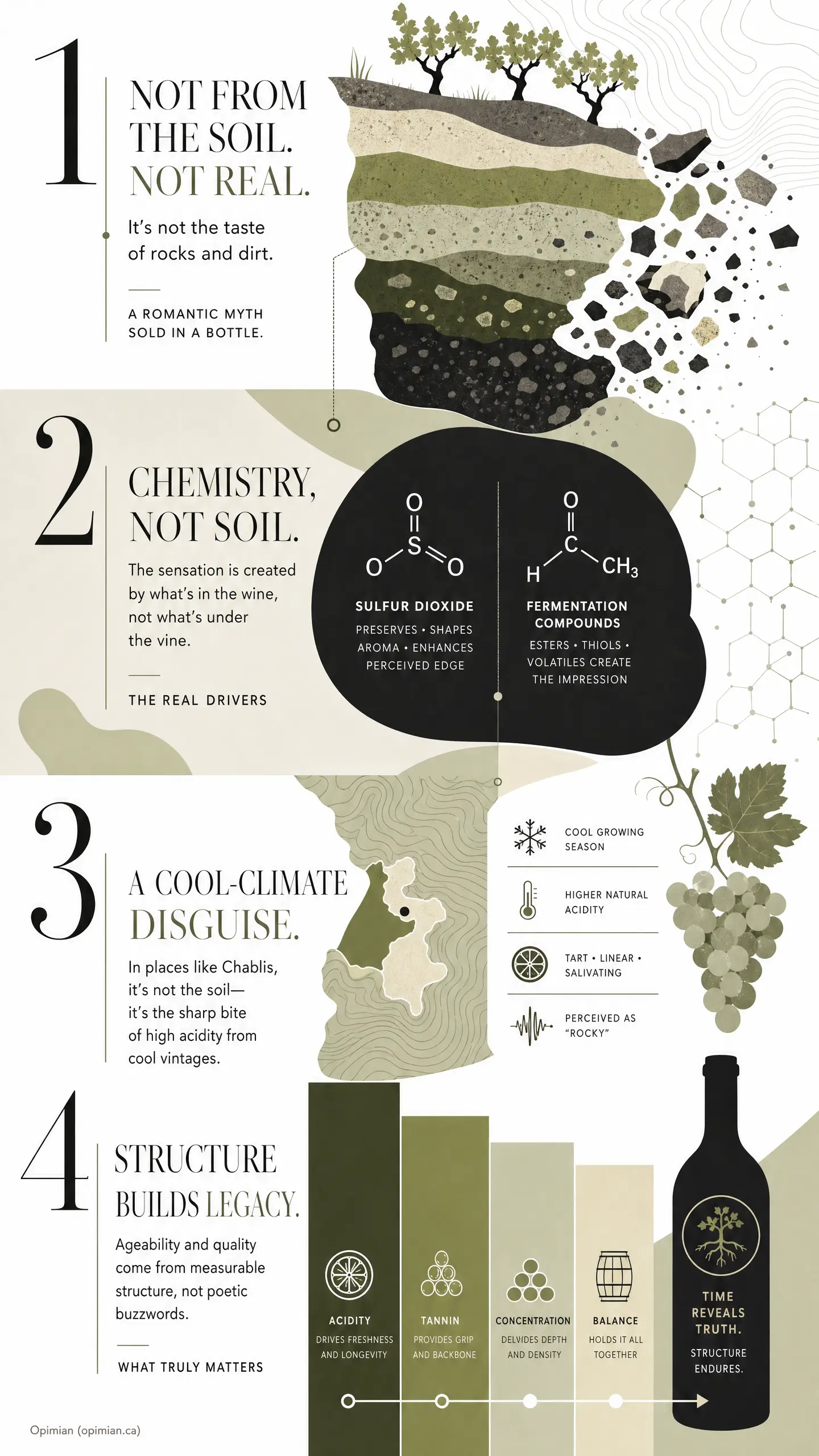
Mother nature does not make wine. She makes vinegar, and sulfur is one of the tools we use to stop her in her tracks at the ethanol stage.
According to a recent study, the strongest chemical driver of "minerality" in Sauvignon Blanc is the sulfur dioxide we add as a preservative. The taste of the ancient vineyard, the one that earns a bottle Grand Cru money, may be the taste of a common by-product of fermentation.
Key Takeaways
- The strongest chemical predictor of perceived mineral character in Sauvignon Blanc is the level of free and bound sulfur dioxide preservatives.
- A 2013 geological review concluded that mineral elements reach wine at concentrations too low to impact flavour, proving minerality is not the literal taste of vineyard rocks.
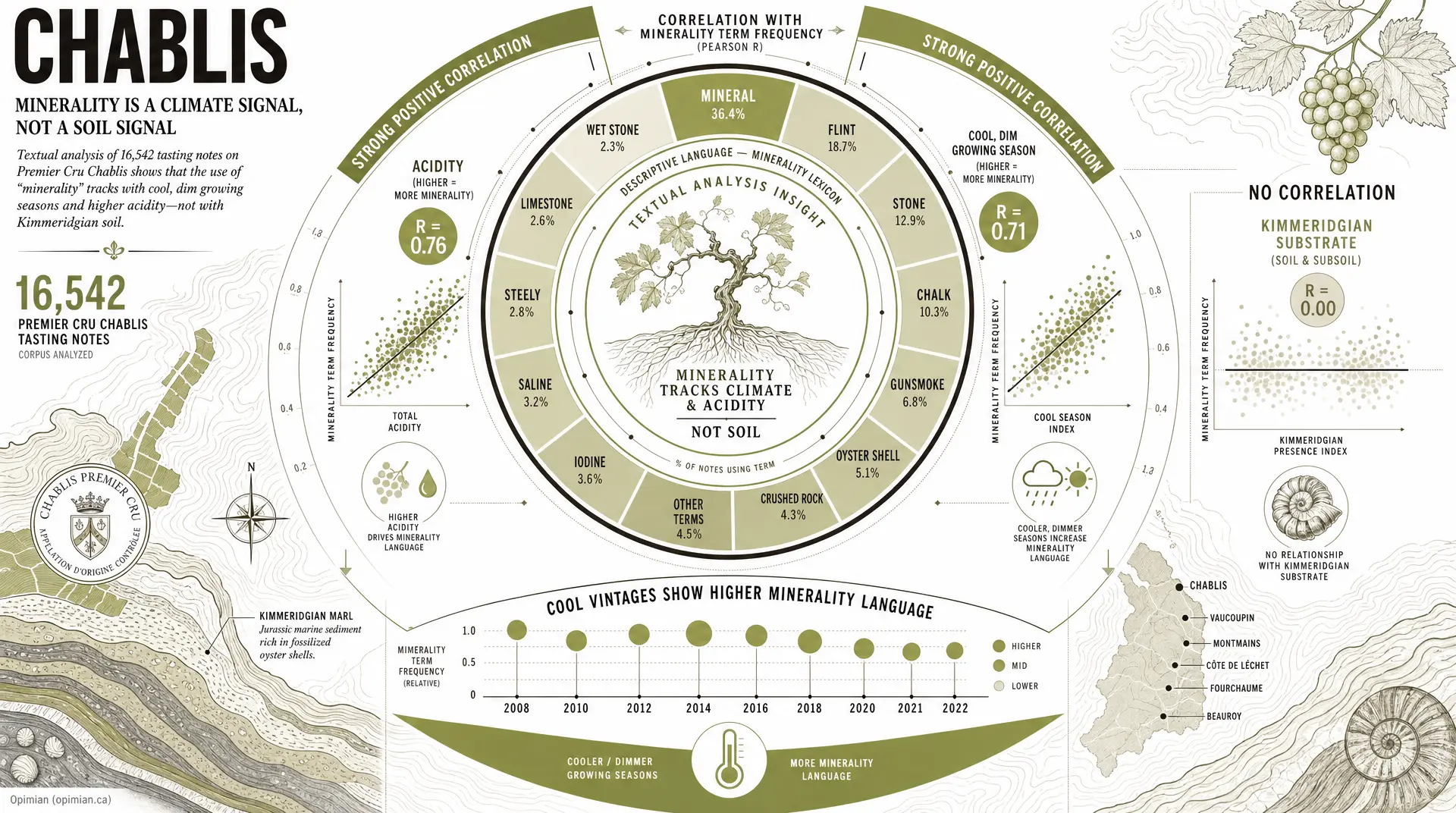
- A 2024 analysis of 16,542 CellarTracker tasting notes revealed that Chablis drinkers associate minerality with high acidity from cool growing seasons rather than Kimmeridgian limestone soils.
- Iowa State University data demonstrates that a wine at pH 3.0 requires only 14 ppm of free sulfur dioxide for protection compared to 109 ppm for a pH 3.9 wine.
- A study of adjacent Soave plots demonstrated that volcanic soils leave traceable strontium isotope ratios in vines without transferring rock chemistry as a discernible flavour.
How Can Licking Vineyard Stones Verify Genuine Minerality in Wine?
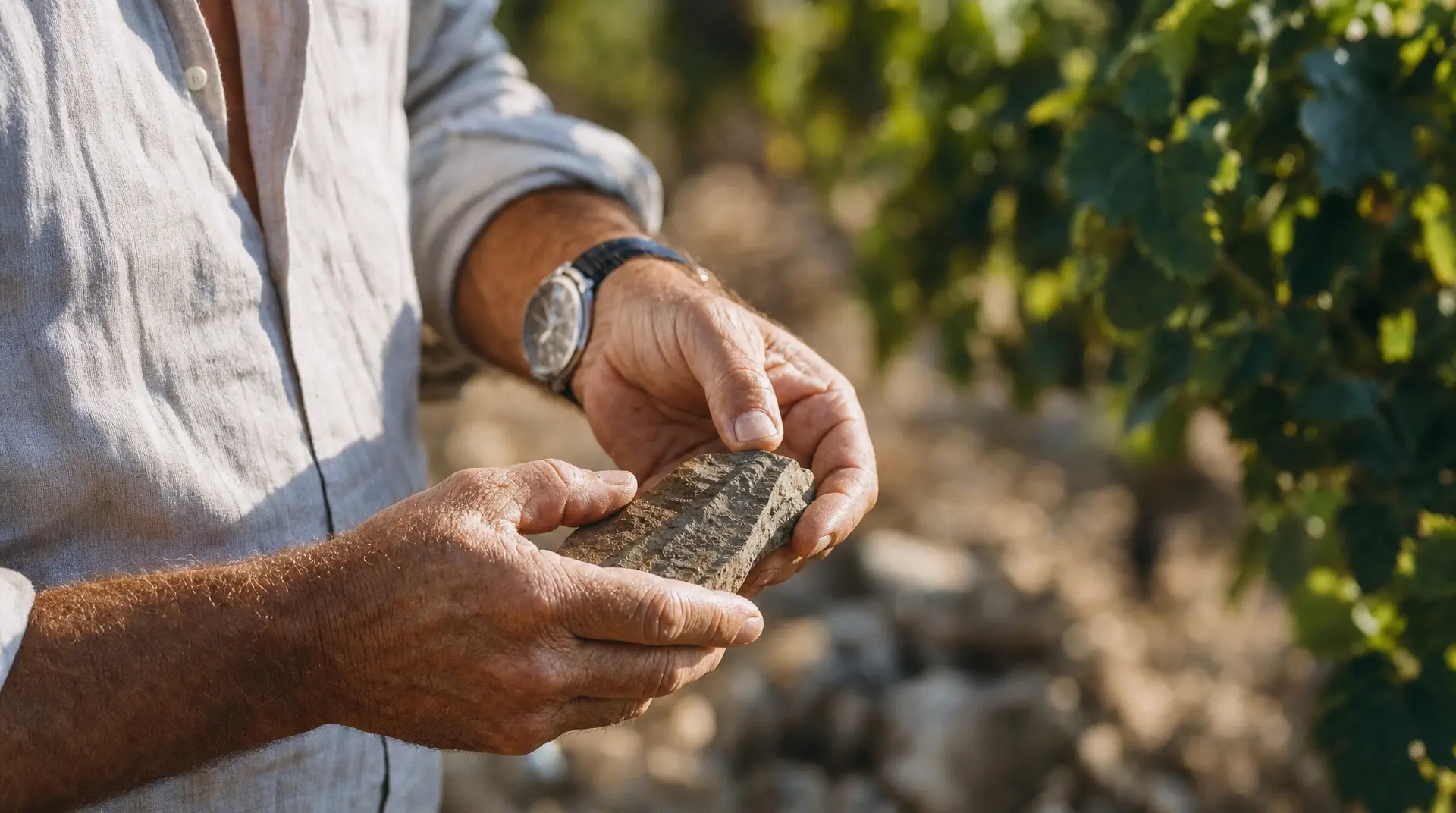
The fairest test I've ever run on this word happened in a producer's cellar in Germany. We were tasting through several really old wines, and he passed around stones from his various vineyards. I licked one. I felt that mineral character sitting on my tongue, and then I went hunting for it in the wines, vineyard by vineyard.
That afternoon set my standard, and I've never moved off it. If you can genuinely trace a line from the stone to the glass, you're entitled to call the wine mineral-tinged. In the absence of that, the word is best avoided. Very few of the people writing "crushed oyster shell" into tasting notes have ever licked anything in a vineyard. I have. It remains the only honest test I know.
Why Is There No Scientific Consensus on the Definition of Wine Minerality?
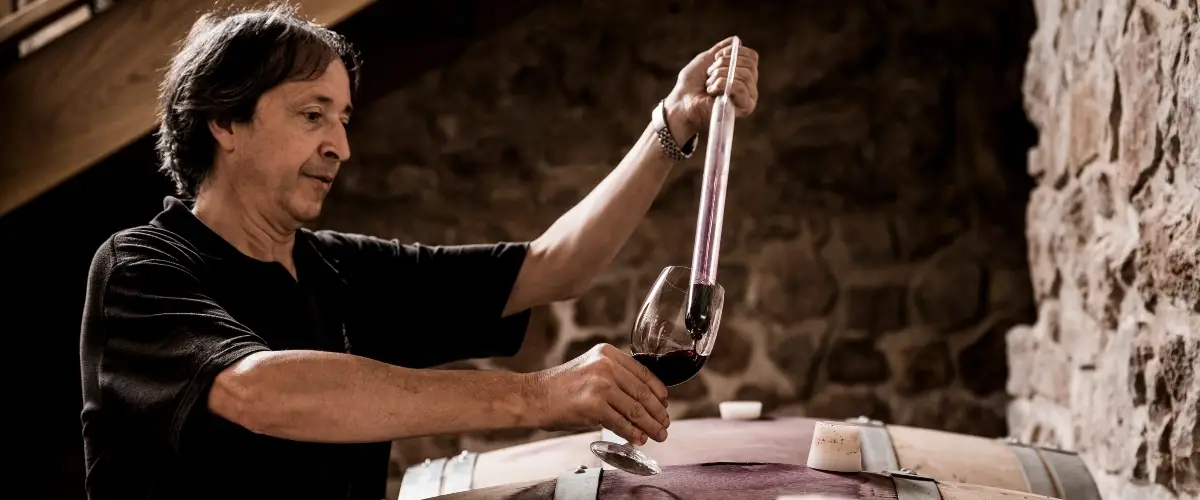
The geology was examined first. Alex Maltman, a geologist, reviewed the whole question back in 2013 and concluded that minerality cannot literally be the taste of vineyard rocks, because the mineral elements that reach the wine are nutrients present at concentrations below flavour significance. There is no chemical pipe running from limestone to your palate.
Then researchers tested the tasters, and things got worse. A survey of 1,697 French-speaking wine consumers found the term had no shared meaning at all. Some had never heard of it, some thought of mineral water, some said terroir, and the experienced tasters reached for gunflint or acidity. Trained experts fared no better. Handed 16 Burgundy Chardonnays, they split into three camps in strong disagreement, each group calling a completely different style of wine "mineral." The published verdict labelled it an ill-defined sensory concept. Twenty years ago we described these same wines with different language entirely. The wines didn't change. The nomenclature did.
Now, that finding should genuinely irritate anyone who has paid Grand Cru money for the word 'minerality'. The "taste of the vineyard" may partly be the taste of the preservative. Chablis tells the same joke: one chemical study found left-bank wines rated more mineral than right-bank ones only when tasters smelled them, and the compound tracking the difference was methanethiol, a sulfur molecule that smells of shellfish and is born in fermentation, not in fossil beds. The famous oyster-shell note may literally be a shellfish-scented fermentation compound. I find that funnier than I probably should.
Why Is the Assumption That Volcanic Soils Impart Wine Minerality a Fallacy?
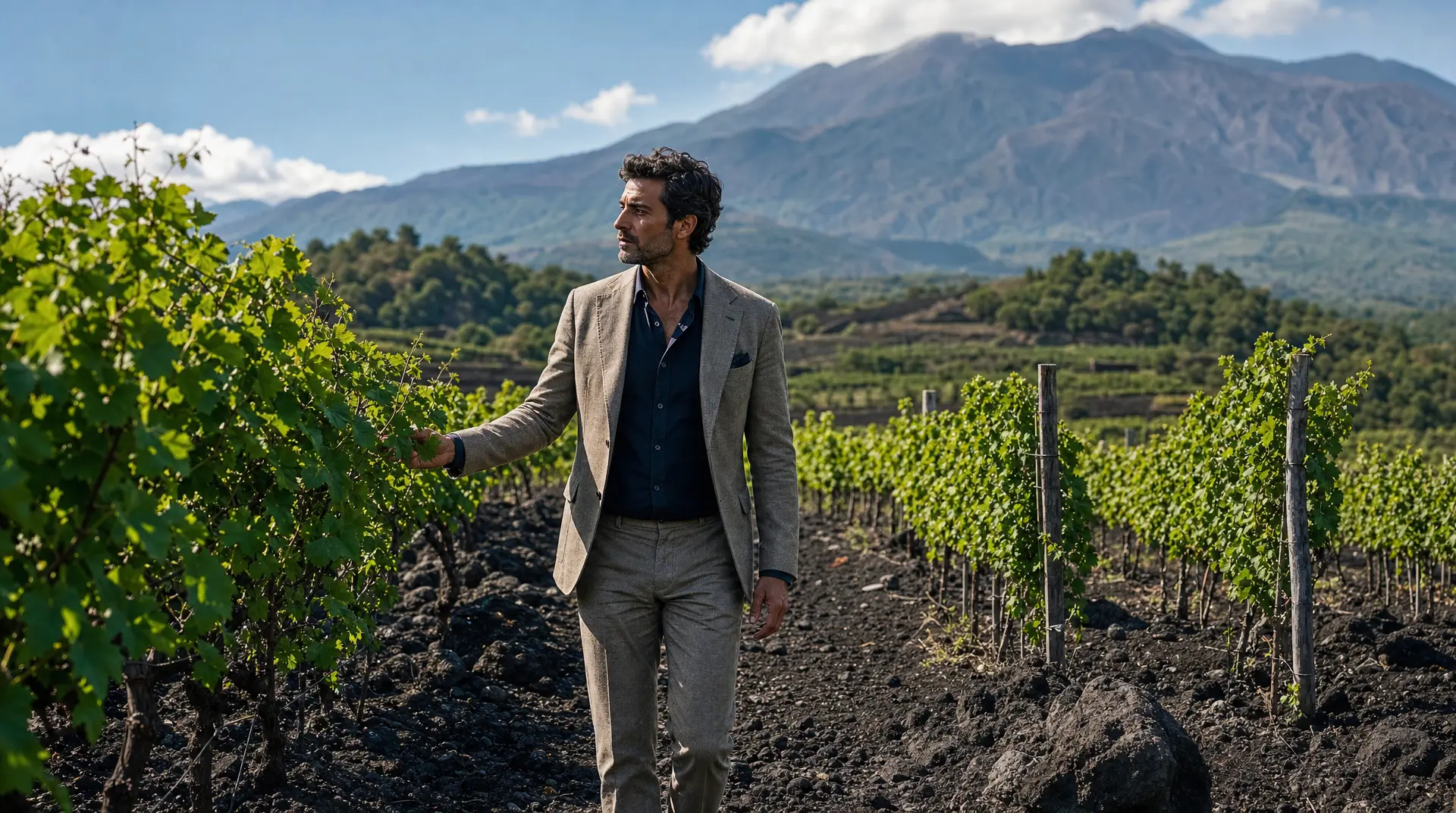
Nowhere does the myth work harder than on volcanic soil, and after more than a hundred trips to Italy, nowhere have I tested it more than here, in the 'boot'. Take Etna. Because it's a volcano, everybody expects the whites to drip minerality. Then the wine goes into barrel, and what you notice is the oak, long before any suggestion of stone. I'd say exactly the same of Soave. It grows on volcanic soils, and it rarely shows me anything I'd call mineral.
The soil science sides with my palate here. A study comparing two adjacent Soave plots with sharply contrasting soils found the vines' composition was broadly similar across both. The geology did leave a signature - strontium isotope ratios that can prove origin in a laboratory - but the vine regulates what it takes up. Rock chemistry reaches the grape through a filter, never as a flavour (or aroma).
Before anyone accuses me of terroir heresy, let me be clear about what I do believe. Etna is, to me, the ultimate proof that terroir is real. Vines are the first thing that dares to tread in those young lava fields - lush green rows coming straight out of black, inhospitable rock, making exceptional wine from native grapes. But they're exceptional because the vines struggle and the yields collapse, and that's just arithmetic. Think of a family. Mum or dad earns $100,000 a year and has two kids, so each kid effectively gets $50,000. Four kids, and it's $25,000 each. A vine's root system is what it is, so fewer bunches means more of everything in each one. Terroir shows up in the glass as concentration, structure and identity. It almost never shows up as rock flavour.
Why Is Chablis Wine Minerality Actually Driven by Acidity Rather Than Soil?
If minerality genuinely came out of the ground, Chablis is where we'd prove it. Kimmeridgian limestone stuffed with fossilised oysters - no vineyard on earth carries more geological romance.
In 2024, researchers ran a textual analysis of 16,542 CellarTracker notes on Premier Cru Chablis written over two decades. Minerality sat in the top three descriptors, exactly as you'd expect. Its usage, though, had nothing to do with the famous soil. Drinkers reached for the word in cool, dim growing seasons and dropped it in warm, sunny ones, while the correlation with the Kimmeridgian substrate itself was nil. They were also more than 1.5 times as likely to call the character "stony" rather than "saline," which tells you how loosely the imagery is bolted on. Cool vintage means higher acidity. People taste fresh acid and citrus, and out comes the magic word.
That fits a 2014 white-wine sensory study which found minerality moved with pH, citrus and wet-stone notes, moved against butter, vanilla and oak, and chemically tracked malic acid, tartaric acid and titratable acidity. Strip the poetry away and most of what gets called minerality is acidity wearing a costume. I said something similar about German Riesling long before I read the paper: there may well be an element of citrus fruit character that simply comes across as mineral.
One confession while we're standing in Chablis. My tasting view has always been that lees contact, malolactic fermentation and oak ageing cloud whatever mineral character exists. It's why I warn collectors never to write off an expensive Grand Cru Chablis, or a Grand Cru white from the Côte d'Or, just because the mineral edge went missing. That same 2024 analysis found no evidence tying the word to any of those techniques, in either direction - so take the clouding as my palate talking, not settled science.
Occasionally I get things wrong. Everybody does. The buying advice stands regardless. Under the oak and flirting with malo, the firm acidity I hunt for as a buyer is fully intact. And even where minerality genuinely is present, it tells you nothing in isolation about ageability, complexity or fruit concentration. It's one of many adjectives. It is not the holy grail.
For completeness, the narrow corridor where I'll accept the word without a fight: unoaked wines, or wines raised in very, very large, very, very old casks that keep the wood out of the way. Very high-quality Riesling. Very high-quality Alsace. That's about it.
Why Is Acidity a Better Indicator of Wine Ageability Than Minerality?
Acidity is acidity, and it can be measured. No poetry required.
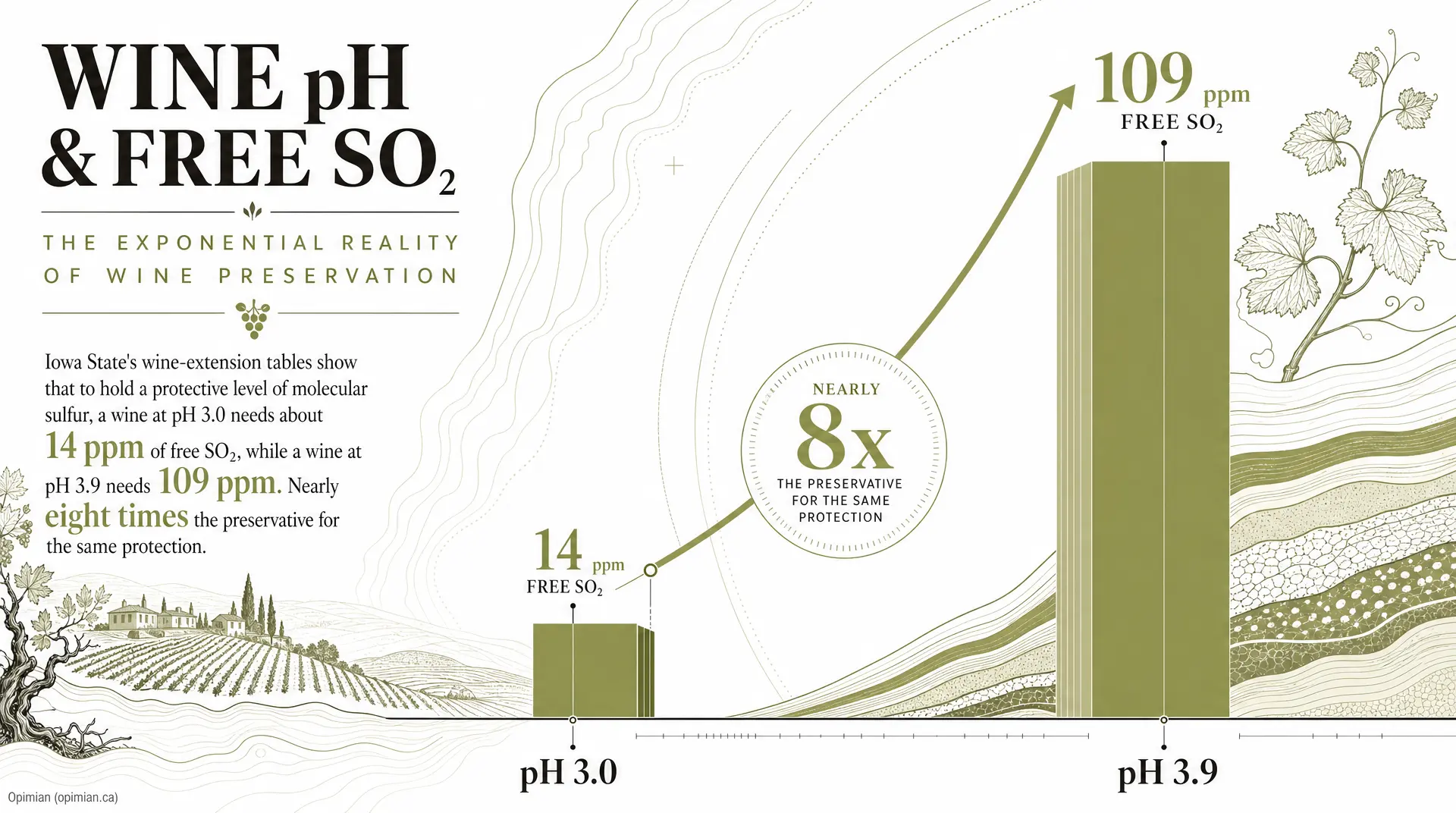
Acidity is the sort of brake pedal on a wine's development, doing the same job lemon juice does on a cut apple. Wine normally sits between pH 2.9 and 3.4, the lowest pH of anything we knowingly drink, and that acid holds the oxidative slide at bay through long years in a dark cellar. The numbers are stark once you see them. Iowa State's wine-extension tables show that to hold a protective level of molecular sulfur, a wine at pH 3.0 needs about 14 ppm of free SO₂, while a wine at pH 3.9 needs 109 ppm. Nearly eight times the preservative for the same protection. A low-pH wine defends itself. A flabby one needs constant medication. When I taste a raw tank sample in Europe knowing an Opimian member will drink it eight months later and may cellar it for a decade after that, the acid structure is my guarantee it won't arrive tired.
A number alone isn't enough, though, because plenty of cheap wine is simply sharp. The difference between age-worthy acidity and sourness is complexity of fruit. In an unoaked German Riesling the fruit may sit in a narrow band of citrus and florals, and that's perfectly fine. Within that band I want several distinct citrus fruits and several distinct floral notes before any secondary character has developed. Complexity is not how big something is. It's how many different things there are - Beethoven's Ninth, gentle passages building as instrument after instrument joins on the way to the choral finale. A wine singing with that many voices at three years old has the stuffing to keep building for 15. You need to peer into a wine's soul to see whether it can develop further complexity, or whether it will just sit in your cellar, huge and monolithic, going nowhere.
How Should Wine Collectors Evaluate Expensive Bottles Instead of Relying on Minerality?
So where does all this leave you, standing in front of a note promising "haunting minerality" on a $300 bottle?
Interrogate the claims you can verify with a corkscrew or a lab analysis: acidity, tannin, concentration, length of finish. When a note leans on atmosphere instead of structure, I start asking questions, because the wines that need poetry are usually the ones that can't win on balance, length, intensity and complexity. I taste plenty of bottles that are technically perfect and lacking personality, and their back labels tend to share the same disease - heavy on evocative vocabulary, light on anything measurable.
At Opimian we ignore third-party scores entirely and taste everything in-house through our panel of Masters of Wine, hunting firm acidity first. Of the 750-plus wines and spirits we graded in 2024, roughly 5% earned Coup de Coeur status, and not one of them earned it for the word "mineral." The allocations we chase are the small, structurally serious ones from producers too tiny for a monopoly listing, because we can go where the liquor boards fear to tread.
I'm not asking you to ban the word from your table. If it's genuinely there in the glass, happy days - use it as one adjective among many. Just don't cellar on it, don't pay a premium for it, and don't walk past a great Chablis because you couldn't find it.
A word never aged a bottle of wine. Acidity does that. And if you're ever truly tempted to invoke the stones, do what I did in that German cellar and lick one first.
Frequently Asked Questions
How does a vintage's climate actually dictate the illusion of minerality in premium whites?
The illusion is entirely climate-driven. A 2024 analysis of over 16,000 Chablis notes proved collectors heavily use the word in cool, damp vintages and drop it in warm ones. Cool years preserve higher natural acidity. Strip away the poetry, and minerality is simply fresh acidity, wearing a terroir costume.
Can adding sulfur dioxide for long-term cellaring artificially create a wine's mineral profile?
Yes, the celebrated 'taste of the vineyard' is often just the taste of the preservative. A 2016 sensory study identified free and bound SO₂ as the primary chemical drivers of perceived mineral character. Mother Nature makes vinegar. The sulfur we use to stop her frequently mimics that coveted, crushed-stone illusion.
If volcanic soils don't impart rock flavors, why are extreme-terroir wines so structurally concentrated?
It is pure arithmetic, not rock flavor. A Soave vineyard study showed vine composition heavily filters geology. Volcanic soils force vines to struggle, brutally suppressing yields. When a root system divides its energy among fewer bunches, you get immense structural concentration and density - the true prerequisites for decades of aging.
How should collectors evaluate a cult wine's aging potential if we discard minerality as a metric?
Look for measurable structure, primarily pH. A low-pH wine acts as its own oxidative brake pedal. According to the OIV's analytical parameters, true trade-relevant metrics are total acidity and pH. Look for microscopic yields and complex acid structure. Ignore the marketing department's fabricated mineral streak.