



In 2026, collectors are still being sold the same fairy tale. Dark colour means longevity. More oak means seriousness. A bigger score means a longer future. To be honest, a lot of that is just noise.
I taste a great many wines that are technically perfect and lacking personality. Some are very expensive. Some are built to impress for 10 minutes in a panel tasting. Quite a few have no real future in the cellar.
If you are buying heavy red wines to age, you need to taste the bones of the wine. Weight on its own tells you very little. I can point to Mosel Riesling, a very light white at around 11% alcohol, aging brilliantly for more than a decade. So the question you need to ask is simple: what structure is holding this wine together?
I want to know what is keeping it fresh, what is carrying the fruit, and whether the wine will become more interesting with time. For me, that starts with acidity. Then tannin quality. Then the wine's ability to build complexity as it ages.
Look, scores move prices. There is money in style. One study on Bordeaux en primeur found an average €2.80 per bottle effect from Parker grades. Inevitably, some producers chase the shape of wine that wins points. They make wines broader, oakier, and more obvious. Collectors then confuse that initial impact with longevity.
Key Takeaways
- A study on Bordeaux en primeur demonstrated that Wine Advocate grades added an average €2.80 per bottle to prices, incentivizing producers to engineer sweeter, oakier wines rather than structurally sound cellaring wines.
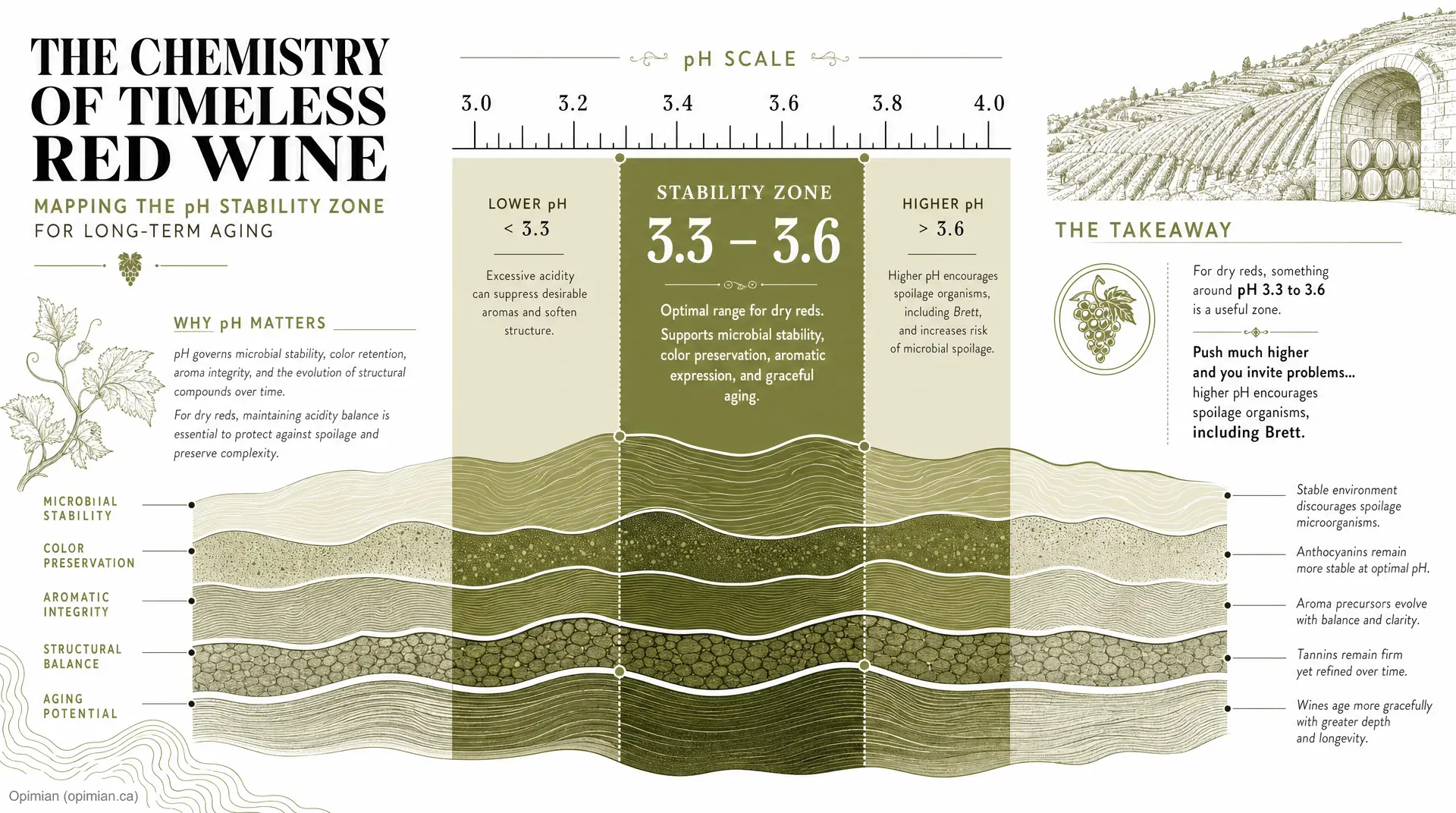
- Maintaining a pH between 3.3 and 3.6 in dry red wines slows oxidation by slowing the formation of aromatic compounds and reducing the risk of microbial spoilage.
- Bottle maturation relies on esterification, a chemical process where acids and alcohols combine over time to form the aromatic esters that create flavor complexity in aged reds.
- Amarone DOCG regulations mandate a minimum of 5.0 g/L total acidity alongside 14% alcohol, ensuring high-extract reds maintain structural balance during their mandatory aging periods.
- Opimian uses Masters of Wine panels to assess wines on balance and intensity. Part of the assessment is to ensure we provide an accurate drinking window so members can enjoy them at the wines' peak.
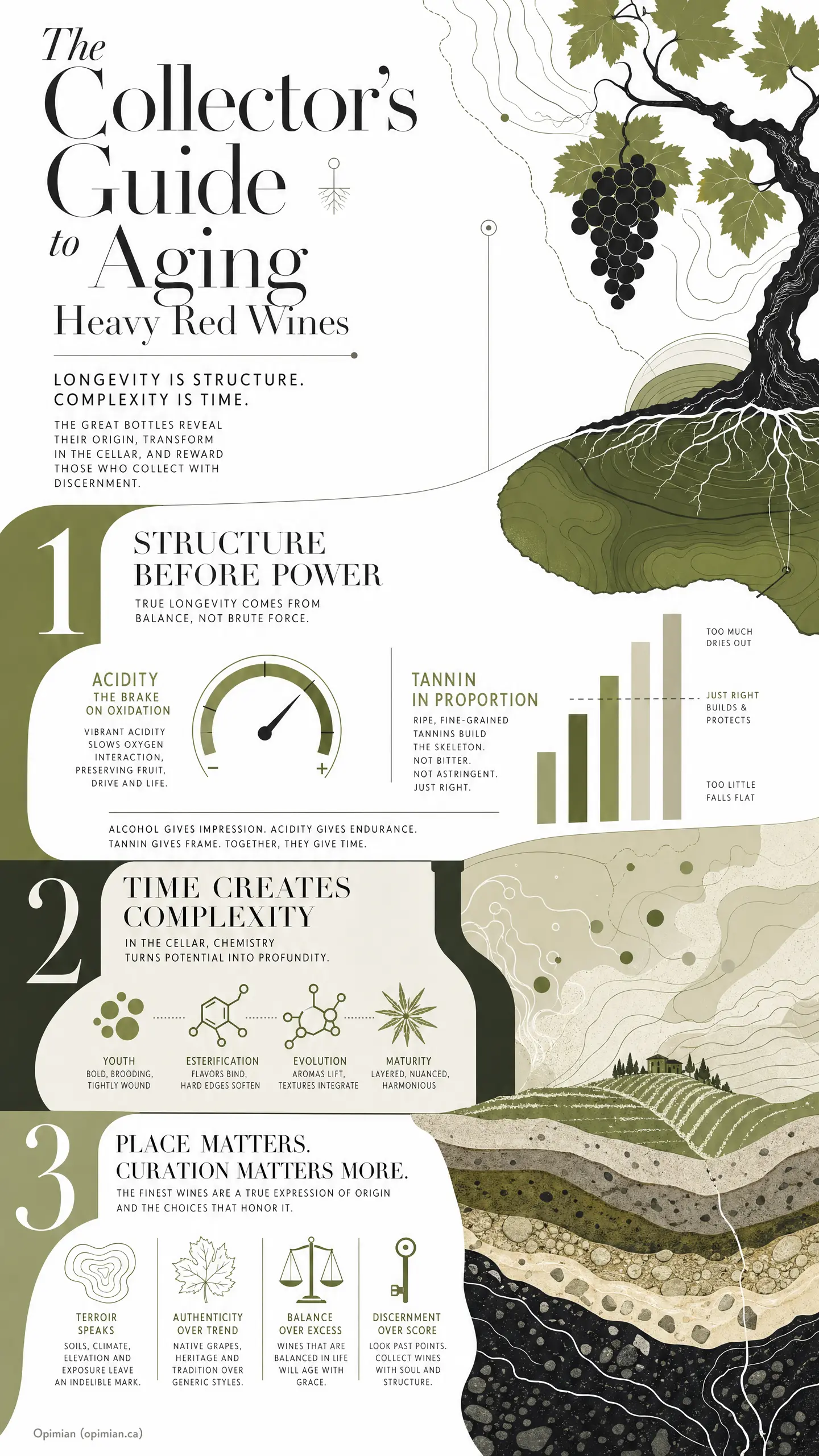
Acidity Comes First
It Slows the Clock
Acidity is the sort of brake pedal on a wine's development. I come back to that again and again because it is the single most important thing.
Cut up an apple and leave it on a plate. It goes brown. Squeeze lemon juice over it and the browning slows right down. The same principle applies in wine. Lower pH slows oxidation.
For dry reds, something around pH 3.3 to 3.6 is a useful zone. Push much higher and you invite problems. The Australian Wine Research Institute notes that higher pH encourages spoilage organisms, including Brett, and also means you need more SO₂ for protection. An oxidation study on 12 standardised wines found that higher pH tracked with more Strecker aldehydes, one of the warning signs of oxidation, especially in red wines. So when I say acidity matters, I mean it chemically, not just as a refreshing taste.
This is also why a red can arrive tired. When I taste a young sample in Tuscany, and I know a member may drink the bottle months later, I am asking whether the fruit and acid are strong enough to carry it through. If that structure is weak, the wine will fade long before the collector opens it.
It Protects the Wine
I also do not romanticize the idea that wine should be left alone to fend for itself. Mother Nature doesn't make wine; Mother Nature makes vinegar, and if we want wine, we're going to have to stop it at that point before the ethanol is naturally converted into acetic acid. Wine is a phase, if you like, of a natural process, and we need to stop it when it is wine.
Sulfur dioxide is one of the tools that helps us do that. The AWRI is very clear about its antioxidant and antimicrobial functions, and links low SO₂ at bottling with premature oxidation, sensory deterioration, microbial spoilage, and high volatile acidity. So if you are serious about long cellaring, you need to think about protection as well as flavour.
Tannins Need to Be Useful
Tannins are the second piece of the puzzle. I often say tannins would be that narrative arc. They pull the wine from the beginning, through the middle, to the end. In a red, they are not there for show. They are there to give shape.
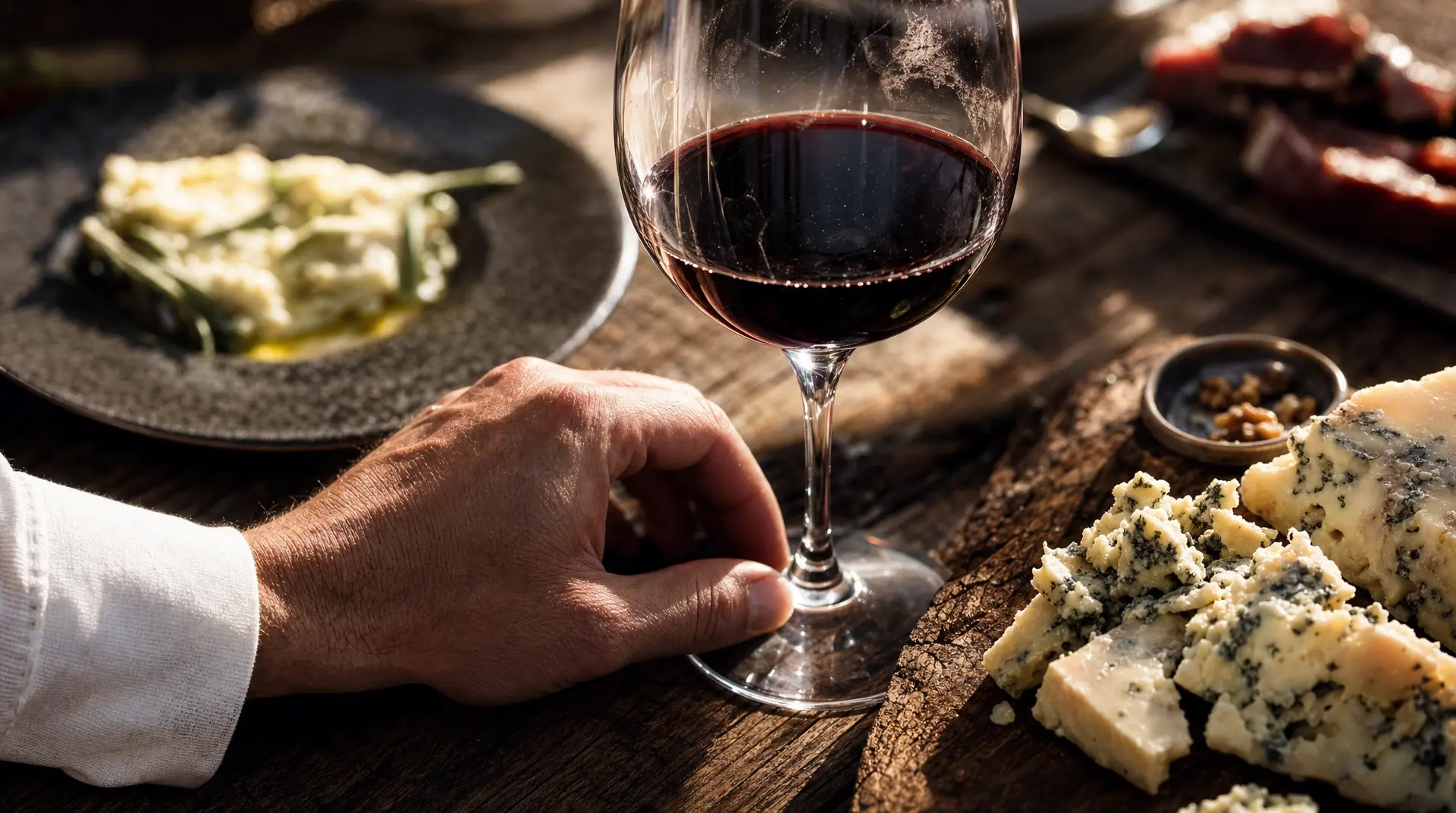
The phrase protein-hungry tannins is not just me being colourful. A controlled study showed tannin binding to salivary proteins in wine, which helps explain astringency. It also helps explain why red wine loves steak and cheese. The tannins have something to latch onto.
So what do I want in a young heavy red? I do not mind lots of tannin. I mind crude tannin. If the tannin is ripe, plentiful, and balanced by fruit and acidity, it will bind together over time, fall out as sediment, and leave the wine smoother.
That is the key point. Quantity on its own tells you very little. Quality and proportion tell you a lot.
Complexity Is What Time Is For
Ageing is not just about a wine becoming softer. That is much too simple. Bottle age involves a whole chain of chemical changes. One review of bottle maturation points to oxidation, esterification, hydrolysis, Strecker reactions, and polymerisation as major drivers of change in aroma, taste, and mouthfeel.
For pleasure, the part I care about most is often esterification during aging. Acids and alcohols combine and form aromatic esters. The wine becomes more layered and more interesting.
That is why some young heavy reds feel dumb rather than simple. They are not finished evolving. When I describe a wine as brooding, I mean it has weight, power, intensity, and the promise of greater things to come. That promise matters enormously in a collector wine.
Amarone Is a Very Good Teacher
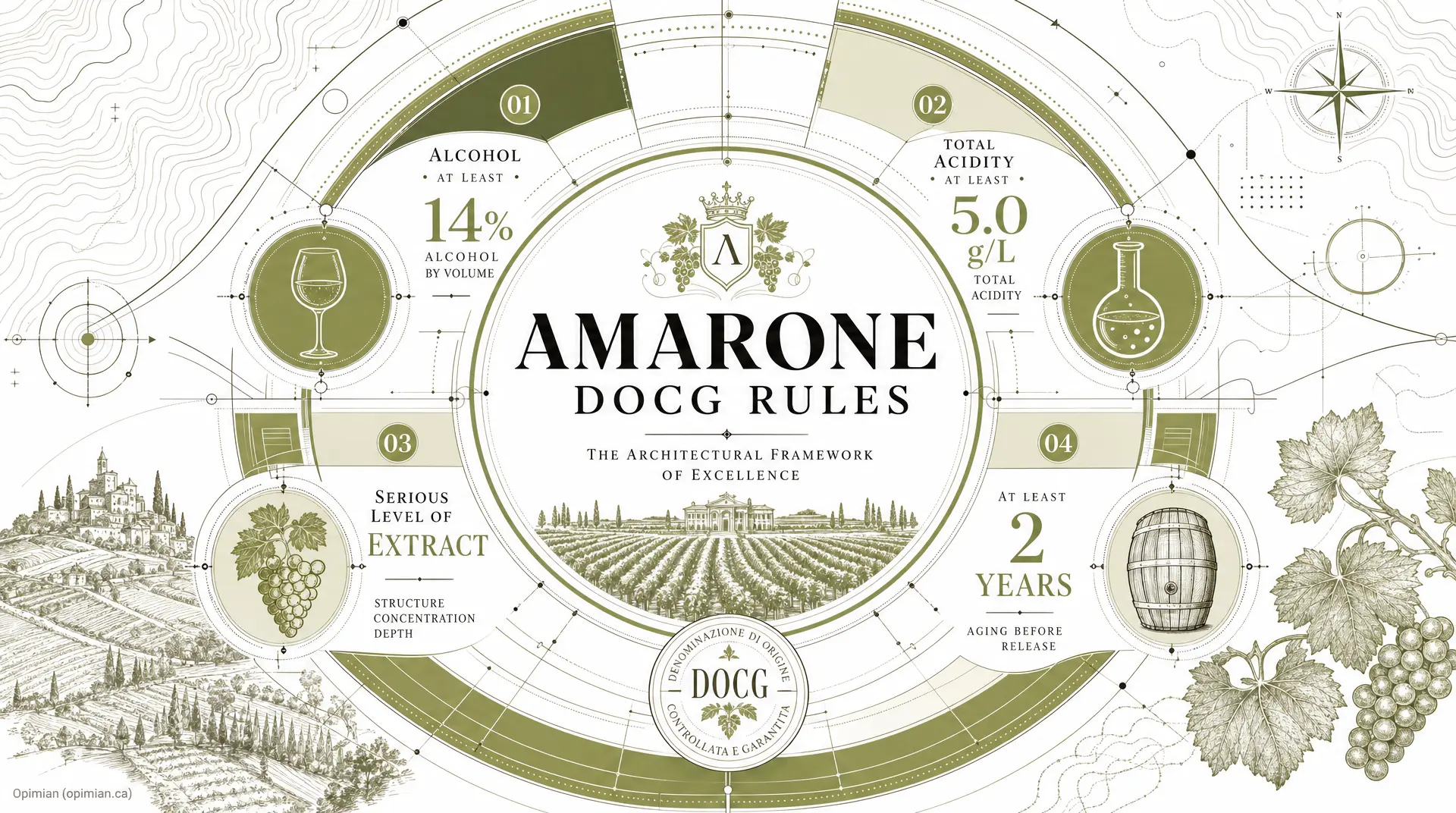
Take Amarone. Everybody notices the alcohol first. Fair enough. It is a big style. But if all you notice is weight, you miss the fruit, the balance and the complexity.
The Amarone DOCG rules require at least 14% alcohol, 5.0 g/L total acidity, a serious level of extract, and at least two years of aging before release, or four for Riserva. In other words, Amarone is built around more than alcohol. Its richness only works when the acidity and extract are doing their job as well.
A bottle of Amarone should not feel like sweet jam and heat. Pair it with game casserole or blue cheese and the whole architecture clicks into place.
Where Heavy Reds Go Wrong
Heavy reds usually go wrong because somebody confuses power with quality. Too much toasted new oak. Too much extraction. Too much sweetness. Too much effort to make the wine look expensive when it is young. Those wines can be very impressive in the first few sips.
The worst winemakers are the ones who stop chasing their own vision and start chasing points. They ask what oak someone else used, what alcohol level got the score, what trick made the wine look grand. Their wines end up tasting of process.
I see this in Italy as well. If I taste a technically perfect Cabernet from Tuscany and it could have come from anywhere, I lose interest. Why would I cellar that? I want the wine to link back to the place on the label.
Why Struggle Can Help
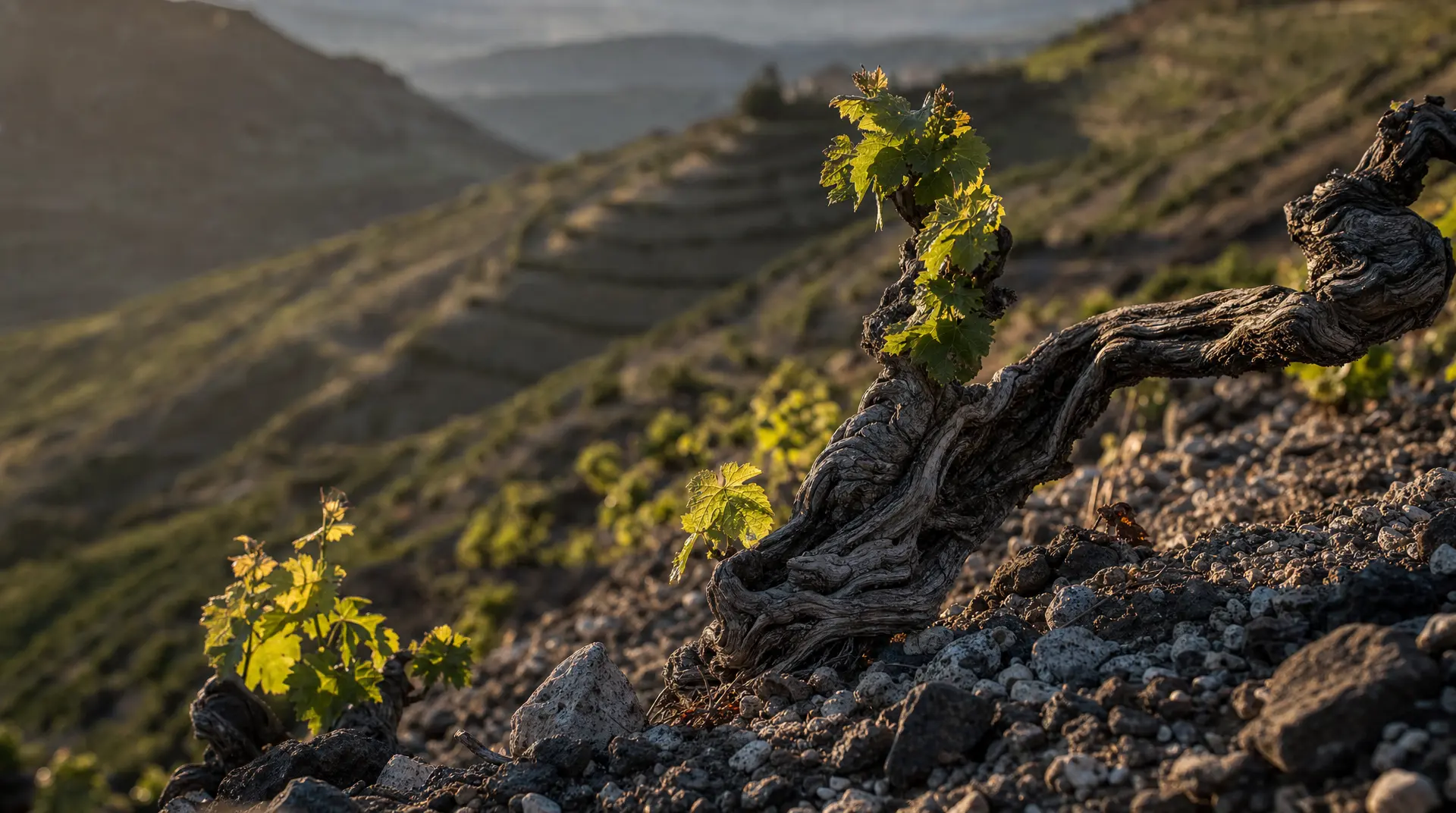
Collectors love difficult sites. Mountain vineyards. Thin soils. Wind. Heat. Volcanic rock. Fine. There is truth in that. But the practical issue is yield.
I often explain this as a family budget. If the vine has a fixed amount of resource and only two bunches to ripen, each bunch gets more than if there are four. Lower yields often mean more concentration. That is one reason a struggling vine can give you a serious wine.
Even so, I would not turn that into a slogan. Lower yield is not magic on its own. A Syrah study found that berry thinning outperformed the heaviest crop reduction, while another found that stronger water stress before ripening increased colour, tannin and total phenolics. So managed struggle can help a great deal.
The same goes for vintage. A difficult year is like a storm at sea. In the easy years, the grower keeps watch and nudges things along. In the hard years, they are out there fighting for the crop, thinning leaves, dropping damaged fruit, and trying to bring a tiny harvest to full ripeness. Sometimes that effort produces brilliant wine. Sometimes the year never quite comes right. You have to taste and judge.
Cellar the Place
For collectors, place matters every bit as much as structure. I tend to use the word personality more than soul, but the idea is similar. The wine should reflect the person who made it and the place it comes from.
Think about the grape as this little video recorder. It records the season. Sun. Rain. Heat. Cold. Then the grape variety interprets that footage in its own way. Nebbiolo films one version of the year. Sangiovese films another. That is terroir in the sense that matters to me.
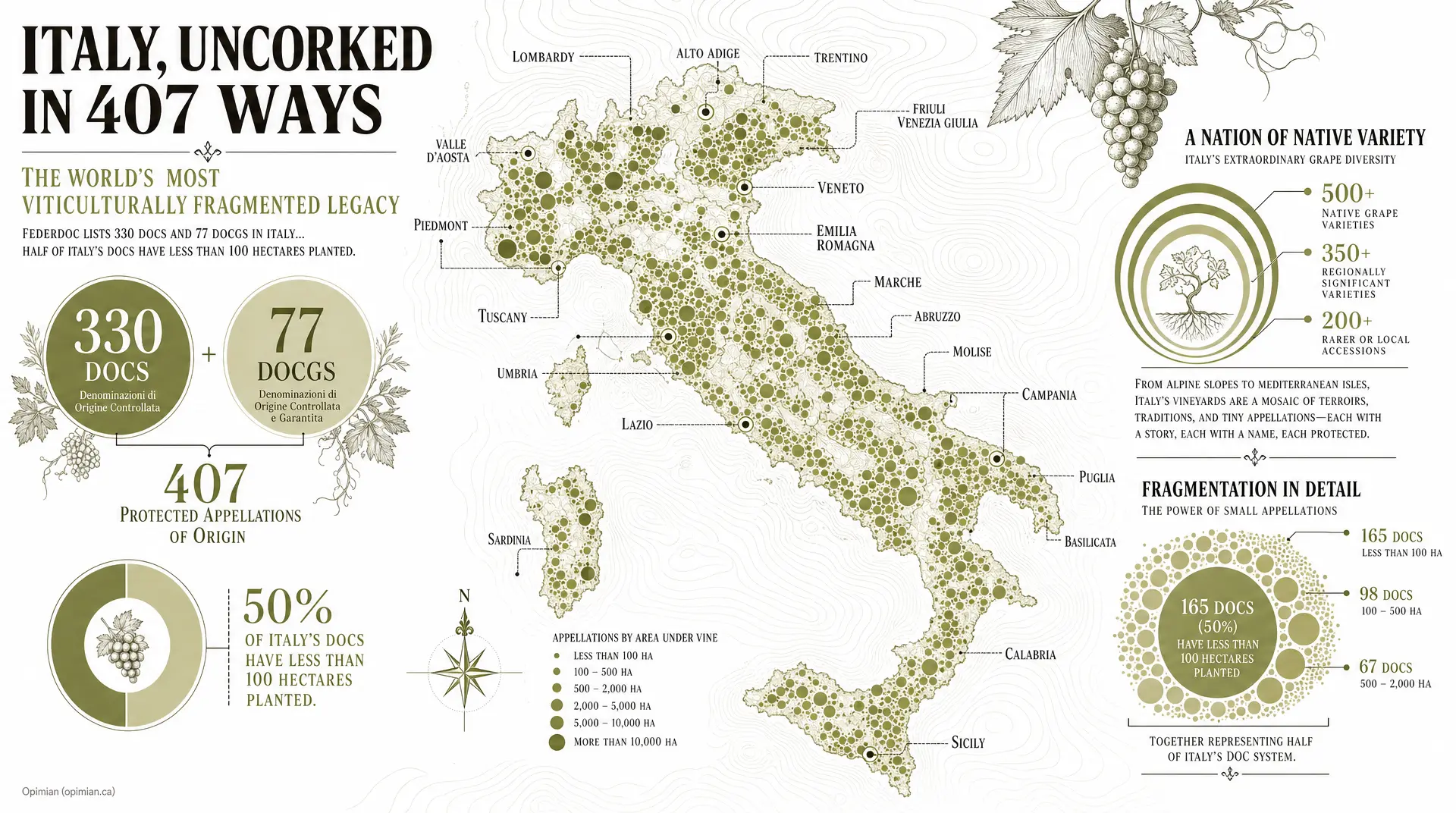
This is why Italy remains so fascinating. It has inventiveness, tradition, and family all going on at once. It is also wildly fragmented. Federdoc lists 330 DOCs and 77 DOCGs in Italy, and I have said for years that half of Italy's DOCs have less than 100 hectares planted. There is a huge amount still to discover.
The market often misses that middle ground. At the bottom end, people buy poor examples of famous names and decide Italy is disappointing. At the very top, they buy expensive wines made from international grapes that barely taste Italian. Between those two poles sits an extraordinary amount of native-grape wine with real personality.
I saw this very clearly with Walter Massa. When I found him, he was preserving Timorasso and there were only six hectares left in the world. He was going bust, and I was his only customer. Today Piemonte has approved 160 additional hectares of eligible Timorasso plantings because demand has grown. That story is about a white wine, yes, but the collector lesson is obvious. The market often ignores the very places where the most interesting wines begin.
How I Buy for Collectors at Opimian
At Opimian, we begin with quality in the glass. Full stop. We are not driven by third-party critic scores. We are not led by marketing departments. We taste, we score, and we reject a lot of wines that are polished but generic.
It is not just me either. We use a panel of Masters of Wine, and we assess wines on balance, length, intensity, and complexity. We score wines in isolation, whether the style is one I would personally drink that evening or not. A wine can be very tannic and still score very highly if the fruit and acidity are there. Once I have that score, I look at the price. If one of the highest-scoring wines also comes in at a surprisingly fair price, boom, Coup de Coeur. Only about 5% of the wines we review get there.
Why Value Still Matters at the Top End
For a collector, Founders Choice is often where this becomes most useful. It gives us room to source a single premium wine for mid- to long-term aging, outside the standard Cellar Offering, with a personalized note from the winemaker. You get six bottles of one wine, which is exactly what a serious cellar needs if you want to watch the wine move over time. And because we buy directly, you generally will not find those wines elsewhere in Canada.
Patience Is Part of the Deal
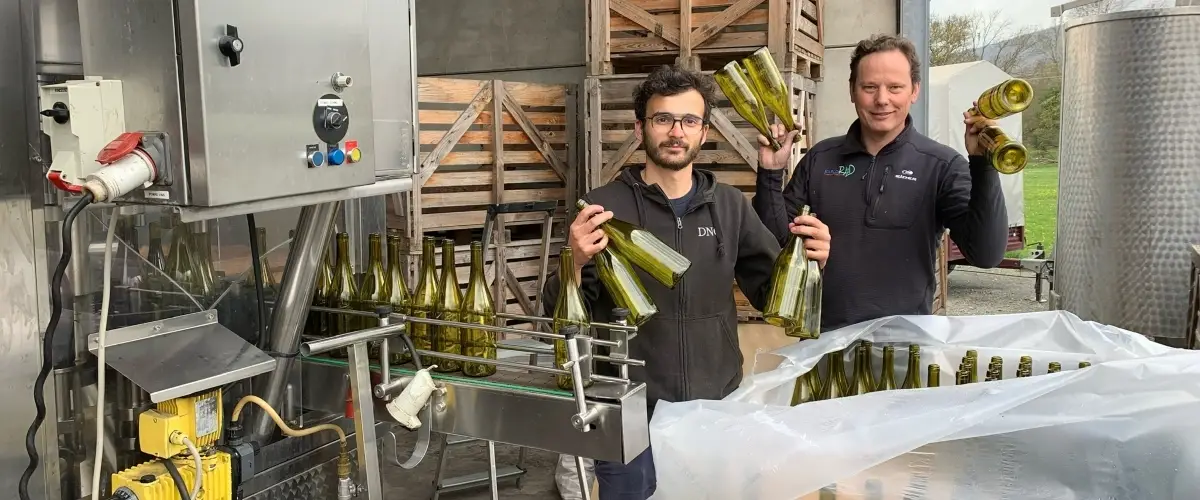
If you buy this way, you do need patience. Wine is an agricultural product. We get one harvest a year. We often taste very young samples, sometimes tank samples, so we can secure the wine while it is still at the estate.
After that, the wine still needs to be bottled, sometimes aged further, and then pushed through the laborious Canadian provincial system. That is why delivery can take four to eight months. For a collector, that delay should not be alarming. It is part of buying directly from the producer rather than from a shelf.
And once I sign off on a wine, the hard work really begins for the Opimian team behind the scenes. They deal with export forms, labels, and compliance. Sometimes the producer does not even have the right printer for the back labels. Our team sorts that, so the grower can get on with making wine.
My Advice for 2026
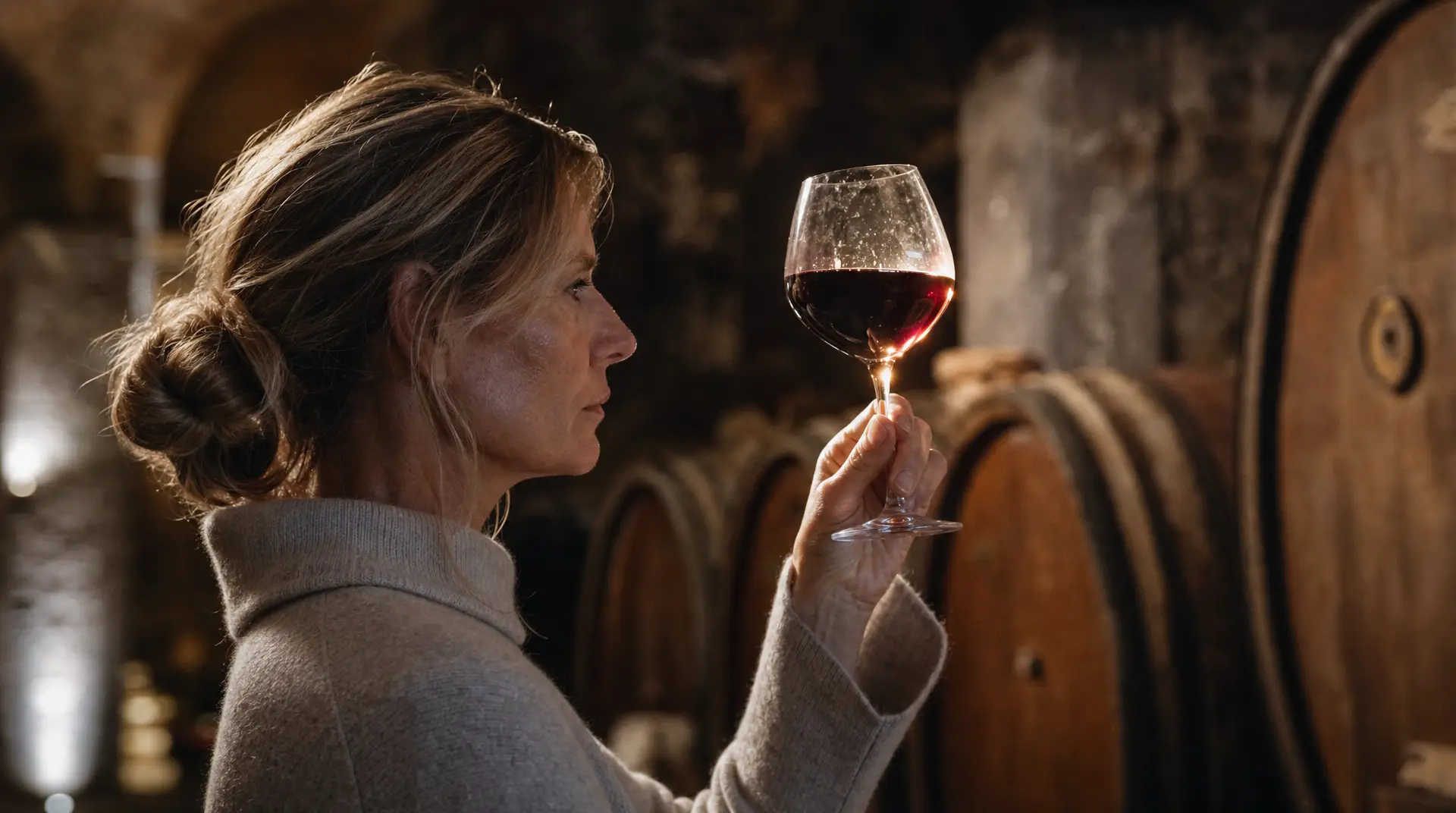
If I were filling a collector's cellar this year, I would buy fewer labels and more depth in the right wines. A proper run of bottles lets you watch the wine move from youth into maturity, and that is the whole pleasure of cellaring.
I would keep coming back to the same questions. Does the wine have clear acidity? Are the tannins ripe, plentiful, and proportionate? Is there enough fruit and aromatic reserve for real development? Does it taste of a place, or merely of oak and technique? Does the price reflect quality, or just confidence?
I would be wary of any wine that wins applause through obvious charm alone. Those wines can be fun, and if you like them, fair enough. I simply would not trust them with a long stretch in the cellar.
The wines I want for age are brooding, balanced, and full of personality. They have a future. They carry their place with them. And when they finally open up, you can feel why you waited.
That, for me, is the whole point of collecting heavy red wine in 2026. A good cellar holds time. It holds patience. And it rewards judgment.
Frequently Asked Questions
How does bottle aging chemically transform the flavour profile of heavy red wines over decades?
It is not just tannins softening. It is a complex chemical chain. Alongside oxidation and polymerisation, esterification during aging binds organic acids and alcohols. This creates the highly complex, layered aromatic esters that define a mature, world-class cellar addition, ensuring the wine builds true personality rather than just fading.
Does aggressive vineyard yield reduction guarantee the necessary tannic structure for long-term cellaring?
Not inherently. Random suffering proves nothing. Execution matters. A controlled Syrah study showed that precision berry thinning - rather than crude cluster reduction - yielded significantly higher proanthocyanidin and phenolic concentrations. You need managed, targeted vine stress to build the architectural bones required to support a heavy red over decades.
Why should serious collectors prioritize hyper-fragmented Italian DOCs over blue-chip Bordeaux or Napa labels?
Collectors should buy what they like. I love blue-chip Napa and Bordeaux. But I love diversity and surprises more. With 330 DOCs and 77 DOCGs accounting for nearly 48% of national production, astute collectors can secure historically rich, terroir-driven, age-worthy reds and whites for a fraction of the cost of the better-known alternatives.
How critical is the relationship between pH and sulfur dioxide for safely aging full-bodied reds?
It is the absolute foundation of cellar stability. Higher pH environments heavily favor spoilage microorganisms and accelerate oxidation. The Australian Wine Research Institute confirms that insufficient SO₂ at bottling - coupled with high pH - guarantees premature oxidation and sensory collapse long before the wine reaches its intended drinking window.
Is elevated volatile acidity acceptable in boutique, old-vine heavy reds marketed as 'authentic' or 'natural'?
Absolutely not. I do not tolerate faults dressed up as authenticity. Volatile acidity is merely a precursor to vinegar.